
(TITC) – Amid the spring atmosphere of Vietnam’s Northwest, when ban flowers (Bauhinia variegata) begin to bloom and cover the mountains in white, the White Thai people joyfully prepare for their traditional Hair-Washing Festival to welcome the New Year. This is a unique ritual that reflects the rich cultural identity of the White Thai community. The festival usually takes place in the afternoon of the last day of the lunar year, on 30th day of the 12th month (the lunar calendar), just before New Year’s Eve. It serves as a way to bid farewell to the old year, wash away misfortunes, and pray for peace and prosperity in the coming year.
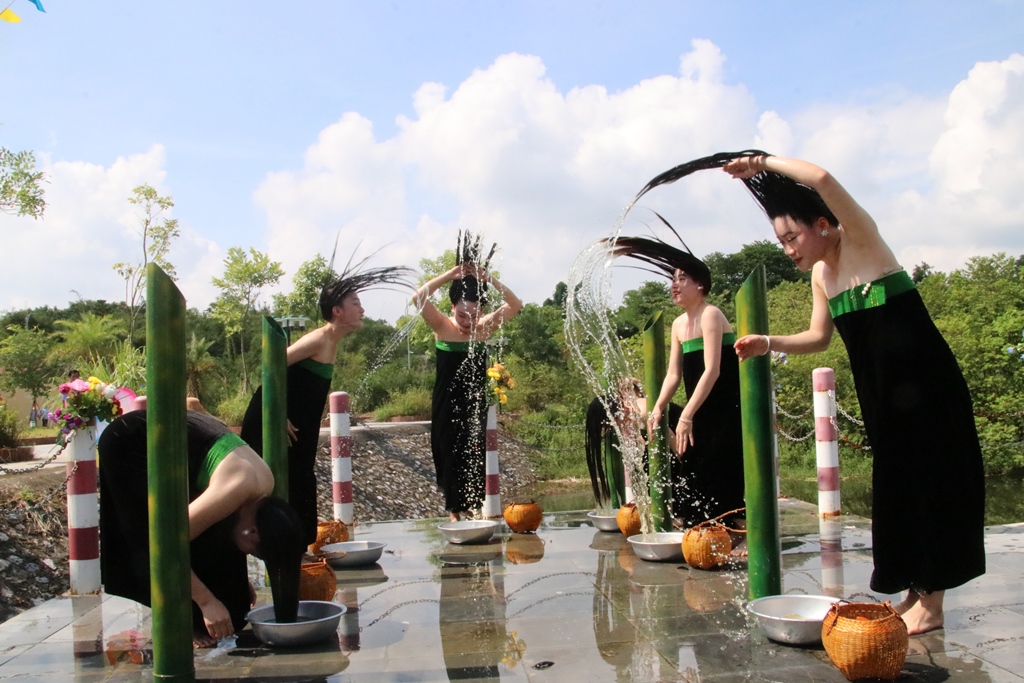
The Unique Hair-Washing Festival to Welcome the New Year of the White Thai People (Photo: langvanhoavietnam.vn)
According to the beliefs of the White Thai, water symbolizes purity and is considered a sacred gift from heaven and earth. Therefore, washing one’s hair with spring water during the festival not only cleanses the body but also purifies the soul, helping to dispel sorrow, illness, and bad luck from the past year. People believe that after washing their hair on the last evening of the year, they will welcome the new year with good health, favourable work, and a bountiful harvest.
The water used for washing must come from a clean, fresh spring, often taken from the head of the stream where heaven and earth meet. White Thai women prepare bundles of fragrant herbs such as pomelo leaves, lemongrass, basil, goosegrass, and forest aromatic leaves. These are boiled together with the spring water to create a pleasantly scented mixture that feels cool and refreshing. Each type of leaf carries its own meaning: pomelo leaves symbolize luck, lemongrass wards off evil spirits, and goose grass represents youth and vitality.
More than just an individual cleansing ritual, the Hair-Washing Festival is also a joyful community event that strengthens social bonds. Elderly women, mothers, and young girls gather together at the stream; their cheerful laughter mingles with the sound of flowing water, creating a vivid springtime scene full of human warmth and cultural beauty. While the women perform the ritual, men prepare offerings to honor the ancestors and tidy up the house. After washing, the women put on their most beautiful traditional costumes to welcome the New Year.
Once the hair-washing ceremony is complete, the White Thai people return home to burn incense and make offerings to their ancestors, inviting them to come back and celebrate the Lunar New Year with their descendants. New Year’s Eve is a sacred and emotional moment when families sit together by the warm fire, share jars of ruou can (fermented rice wine drunk through long bamboo straws), enjoy colourful sticky rice, grilled fish, and other traditional dishes. They recount stories of the past year and send each other their best wishes for the year ahead.
In modern times, the Hair-Washing Festival has become not only a cherished traditional custom but also an attractive cultural tourism event in the northwestern provinces where the White Thai live. Visitors to Thai villages can immerse themselves in the serene atmosphere of the mountains, experience herbal hair washing in crystal-clear spring water, and gain a deeper understanding of the Thai people’s philosophy of living in harmony with nature.
The Hair-Washing Festival to welcome the New Year of the White Thai people stands as a vivid symbol of the spiritual and cultural beauty of Vietnam’s ethnic minority communities. Amid the fast-paced rhythm of modern life, this ritual continues to be preserved and passed down through generations, like a pure, gentle stream flowing endlessly through countless springs, contributing to the colourful cultural identity of the Northwest region.
Tourism Information Technology Center