
(TITC) – The western region of Cao Bằng Province is home to numerous historical sites, scenic landscapes, and a rich cultural identity shaped by various ethnic groups, including the Tày, Nùng, Mông, Dao, Sán Chỉ, and Lô Lô. Visitors to this area can immerse themselves in authentic local experiences within the Non Nuoc Cao Bang UNESCO Global Geopark.
Blessed with pristine natural beauty, western Cao Bằng is a land of rivers, mountains, and winding passes. Its diverse terrain creates a dramatic landscape that captivates travelers with towering peaks and verdant valleys. Along National Highway 34, visitors will encounter one breathtaking mountain pass after another, where lush green forests, cornfields, and traditional stilt houses of local communities create a vivid and picturesque scene.
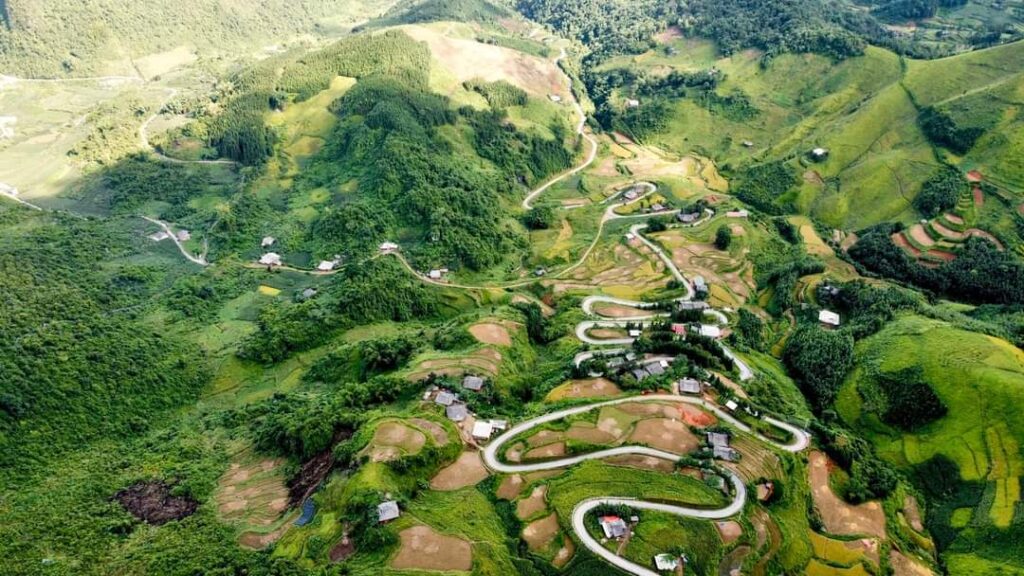
Khau Cốc Trà Pass – a famous highlight on the journey to explore western Cao Bằng
One of the most striking highlights of this route is Khau Cốc Trà Pass, a 15-level zigzagging ascent that challenges drivers while rewarding them with magnificent views of mountains and forests. The region’s natural beauty transforms with the seasons: white plum blossoms in early spring, pear flowers in mid-spring, and fiery kapok and tung blossoms later in the season. In autumn, golden rice terraces ripple across the hillsides, creating a poetic contrast with the rugged mountain backdrop.
Among the area’s scenic spots, Thôn Lốm Lake and Hổ Nhảy Stream stand out for their tranquil, harmonious blend of water and mountains. The Gâm River, originating from the Guangxi Zhuang Autonomous Region (China), flows through Cao Bằng toward Tuyên Quang Province. Its jade-green waters weave gracefully between towering peaks and terraced fields, offering both scenic charm and a source of local culinary treasures. The river is home to the region’s prized “five freshwater specialties”, Anh Vũ fish (once reserved for the kings), green hemibagrus, hemibagrus guttatus, bagrid catfish, and goby fish, all delicacies beloved by locals.
Western Cao Bằng is also a vibrant mosaic of ethnic cultures. Each community from the Tày and Nùng to the Mông, Dao, Sán Chỉ, and Lô Lô, preserves its unique customs, architecture, cuisine, and festivals. Traditional stilt houses, ethnic dishes, folk dances, and colorful festivals invite travelers to explore and experience the depth of local heritage.
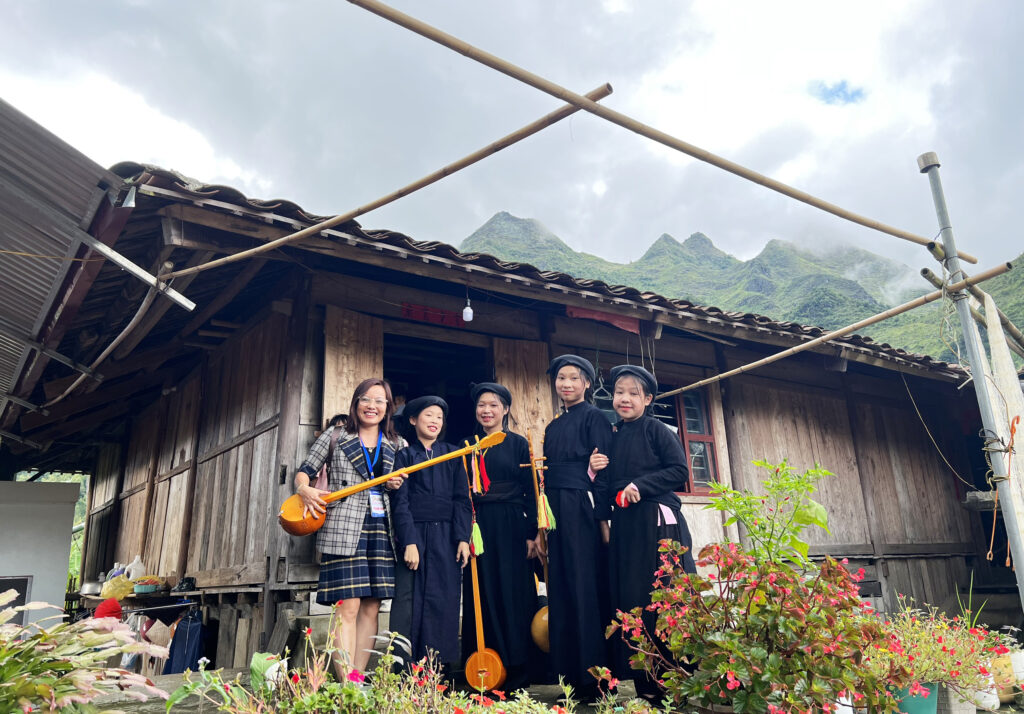
Tourists interact with local ethnic communities
In Bảo Lạc Town, the famous Bảo Lạc Market Fair serves as a cultural crossroad for ethnic minorities. Held every five days on the 5th, 10th, 15th, 20th, and 25th days of the lunar month, the market bursts with vibrant colors and lively sounds. Locals dressed in their finest traditional attire, Hmong women in flared embroidered skirts, Lô Lô and Sán Chỉ women in red and black costumes, and Tày and Nùng women in indigo headscarves, gather to trade, meet friends, and celebrate community life. The market offers a variety of local specialties such as bamboo shoots, forest vegetables, honey, and handwoven brocade, which make for unique and meaningful souvenirs.
The Bảo Lạc Night Market adds another lively dimension to local tourism and nightlife. Held every Saturday, it features folk performances and traditional music such as Then, Sli, Lượn, and Nàng ới songs, giving visitors a deeper appreciation of the area’s cultural richness. Visitors can also savor regional delicacies like fermented pork, smoked sausages, thắng cố (horse stew), sweet rice cakes, and ant egg cakes, each offering a taste of authentic mountain life.
With its majestic natural scenery and distinctive ethnic cultures, western Cao Bằng promises travelers not only an unforgettable journey but also a meaningful experience of Vietnam’s northern highlands. These attractions contribute to the preservation and sustainable development of the Non Nuoc Cao Bang UNESCO Global Geopark, a landscape where nature, heritage, and culture come together in harmony.
Tourism Information Technology Center