
(TITC) – Ho Chi Minh City, a youthful, dynamic, and modern metropolis, continues to embrace a vibrant mosaic of diverse cultural colours. As not only the country’s largest economic center but also a “common home” to various ethnic minority communities such as the Cham, Hoa, Khmer, Tay, Nung, and Chau Ro, the city embodies a rich blend of traditions. Each community, driven by love for their homeland and roots, has brought with them unique cultural identities that enrich the city’s spiritual life. This harmonious convergence has created a distinctive and colourful cultural picture, forming one of Ho Chi Minh City’s greatest charms.
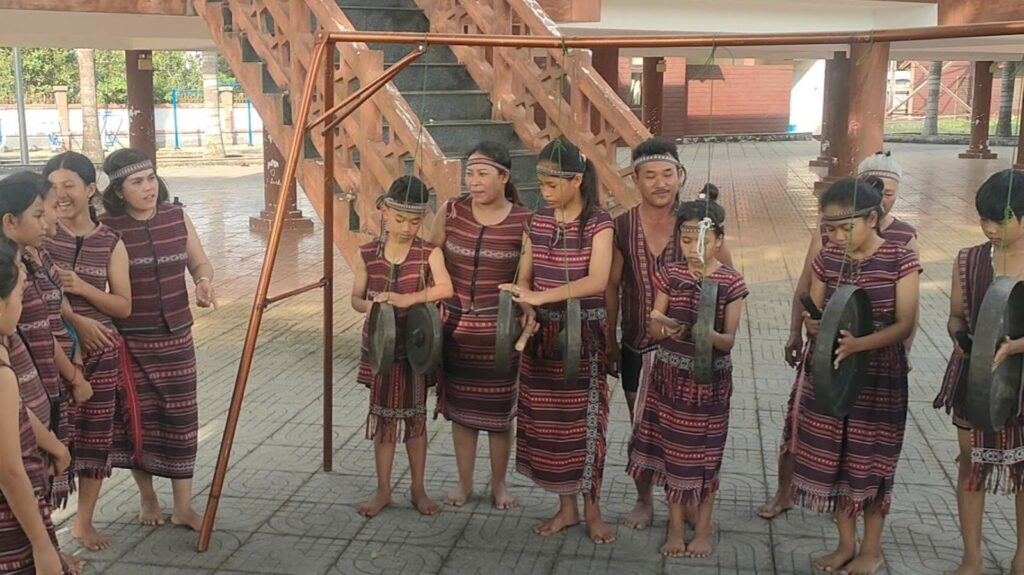
Chau Ro ethnic people teach younger generations how to play gongs
Amid the bustling rhythm of urban life, the preservation and promotion of traditional cultural values among ethnic minorities have become increasingly meaningful. The city has implemented numerous programmes and initiatives to improve both the material and spiritual well-being of ethnic communities, while also creating opportunities for them to maintain customs, traditions, and heritage. Culture is not merely a memory of a community, it is a spiritual foundation, a bridge connecting today’s generation with their ancestors.
Each ethnic group in the city possesses its own “treasures”: distinctive architectural styles, performing arts, handicrafts, traditional costumes, cuisine, languages, scripts, folk games, and sports. However, under the strong influence of modern cultural integration, many traditional values are at risk of fading away. Therefore, the restoration, preservation, and promotion of festivals and folk activities have become vital tasks, not only to meet the cultural and spiritual needs of ethnic communities but also to nurture national identity amid urban life.
In Ho Chi Minh City, ethnic festivals are organized thoughtfully and have become important cultural gatherings for the community. The ceremonial parts, featuring incense offerings, processions, and rituals, reflect deep spiritual beliefs and gratitude to ancestors. Meanwhile, the festive parts come alive with the resonant sounds of gongs, graceful sạp dances, heartfelt folk songs, and joyful traditional games such as tug-of-war, stilt walking, crossbow shooting, and shuttlecock throwing. Traditional culinary competitions also offer opportunities for each ethnic group to showcase their distinctive dishes, preserving the flavours of their homeland amid the city’s modern rhythm. These vibrant events not only satisfy cultural needs but also spread ethnic heritage to a broader audience of residents and visitors.
A particularly meaningful aspect is that through these festivals, younger generations can experience, learn, and take pride in the cultural legacy of their ancestors. They can wear traditional costumes, practice folk dances, or listen to stories about ancient customs and games. This hands-on engagement serves as a “key” to ensuring that cultural identity is neither forgotten nor static, but rather passed on and renewed through each generation.
For preservation and promotion efforts to be effective, Ho Chi Minh City recognizes the need for close collaboration among authorities, specialized agencies, and most importantly, the active creativity of the community itself. It is essential to revive traditional festivals, eliminate outdated customs, prevent commercialization, and maintain the purity of cultural life. At the same time, the city encourages communities to harmoniously combine tradition with modernity in their practices, ensuring that ethnic culture remains both authentic and relevant in contemporary urban living.
It can be said that the preservation and promotion of ethnic minority cultures in Ho Chi Minh City not only enrich the city’s spiritual life but also strengthen unity and community bonds. Within this diversity lies the brilliance, compassion, and civility that define the city. When culture is preserved and shared, it becomes the enduring foundation that allows the city named after President Ho Chi Minh to advance toward integration while retaining its national soul and identity.
Tourism Information Technology Center