
(TITC) – Chung cake is an indispensable dish in Vietnamese culinary culture whenever Tet, the Lunar New Year, arrives. While people in the lowlands are familiar with the traditional green banh chung wrapped in dong leaves, in the mountainous region of Lang Son, the Tay ethnic group has a distinctive variation known as black chung cake (banh chung den).
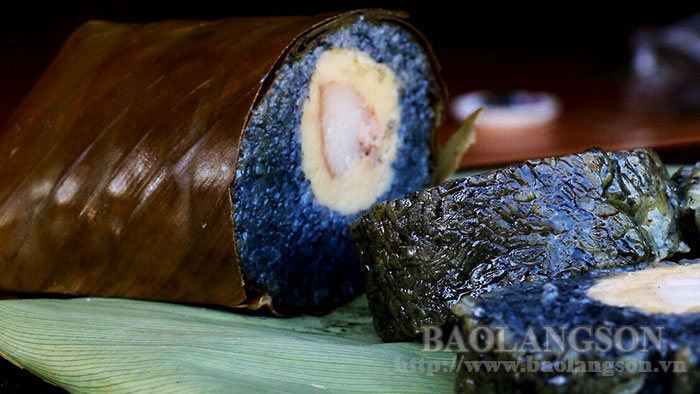
Black Chung cake features a distinctive colour and a delicious, appealing flavour. (Photo: Lang Son News)
Black chung cake often appears during Tet, weddings, and other important family or clan ceremonies of the Tay people in Lang Son. Believing that all things possess a soul, the Tay consider the black colour of the cake a sacred symbol representing the harmony between heaven and earth, as well as strength, prosperity, and the wish for favourable weather and good harvests. For this reason, the cake is not merely food, it is also a spiritual offering used in ancestral worship rituals.
The most striking difference between black chung cake and the traditional version lies in its colour. Instead of using plain white glutinous rice, the Tay people dye the rice black using ash made from the nuc nac tree or muoi tree bark. The ash is carefully sifted, mixed with water, and the clear liquid is used to soak the rice overnight. This process gives each grain a shiny black hue, and when cooked, the outer layer of the cake becomes glossy and jet-black, creating a visually distinctive appearance.
The filling of the cake is also quite elaborate. In addition to familiar ingredients like pork belly and mung beans, some regions add special local spices such as hat doi and mac khen, aromatic seeds found in the northern mountains. This combination results in a rich, savory, and slightly nutty flavor that is both familiar and intriguingly unique to anyone tasting it for the first time.
The cake is wrapped in large, dark-green dong leaves gathered from the forest. The leaves are cleaned and lightly heated over a fire to make them soft and pliable. The wrapping process requires great skill, each layer of rice, bean, and pork must be arranged evenly and firmly by hand. Once wrapped, the cakes are boiled for 10 to 12 hours to ensure that the glutinous rice cooks thoroughly, resulting in a fragrant, sticky texture.
Beyond its culinary value, black chung cake has become a distinctive local specialty that attracts visitors to Lang Son. At highland markets and during traditional Long Tong (field plowing) festivals, visitors can easily find pairs of black chung cakes on display, both to enjoy on the spot and to take home as gifts. Many first-time visitors are surprised by the cake’s unusual colour, but after just one bite, they are often captivated by its chewy texture, rich flavour, and the subtle aroma of mountain herbs.
Today, alongside the development of community-based tourism, black chung cake is gradually becoming a cultural and culinary symbol of the Tay people in Lang Son. This traditional dish not only preserves the ethnic group’s heritage but also opens new opportunities for sustainable local economic growth, turning a humble Tet delicacy into a proud emblem of Tay culture.
Tourism Information Technology Center