
(TITC) – The traditional art of beeswax painting, used to create intricate patterns on the fabrics of the H’Mong people in Mu Cang Chai, Tram Tau, and Van Chan districts (Yen Bai province), has recently been recognized as a National Intangible Cultural Heritage. This recognition not only affirms the cultural value of the craft but also encourages its preservation and promotion, drawing more visitors to the highlands of Yen Bai.
A Delicate Handcrafted Tradition
Beeswax painting on fabric is a meticulous, entirely handmade process. From the choice of natural dyes to the design of patterns, every stage requires patience and skill. Among these, the stage of applying beeswax is considered the most sophisticated, demanding both precision and creativity. It is this process that gives the costumes of H’Mong women their distinctive beauty.
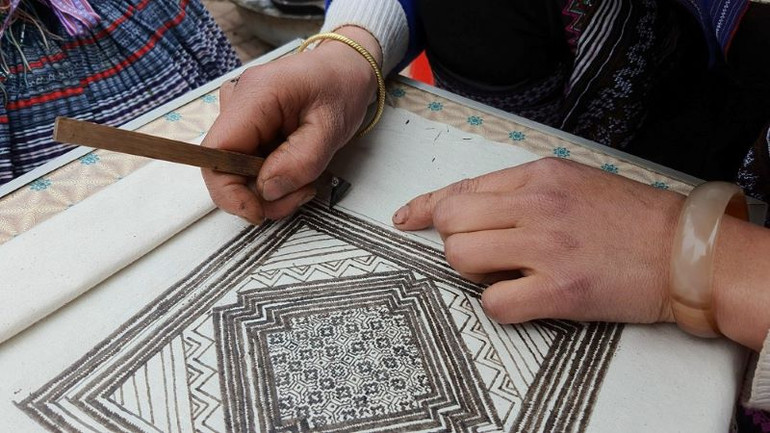
The key tool is a handmade drawing pen. It consists of two thin copper leaves attached to a bamboo stick about seven centimeters long, with a small cavity to hold the melted wax. The pen tip is shaped from triangular copper and fixed to the stick.
Artisans use three types of pens: a large-tipped one for sketching and straight lines, and smaller, finer tips for detailed motifs. The thinner the pen tip, the more delicate the patterns. Though seemingly simple, these strokes carry profound meaning, often inspired by ancient legends, epics about the origins of the H’Mong people, natural landscapes, and native plants and animals.
Motifs of Nature and Myth
The beeswax designs are a blend of geometry and nature. Borders are often drawn in square grids, crosses, diamonds, triangles, circles, double spirals, saw teeth, curves, and waves. Inside these frames appear patterns of stars, squash blossoms, garlic flowers, plum and peach blossoms, spider webs, butterfly wings, and fish scales. Each motif reflects both aesthetic sensibility and cultural memory.
When drawing, artisans dip the pen into a bowl of heated beeswax, carefully controlling the amount so it flows evenly onto the fabric. This process requires steady hands and a practiced eye, showcasing the dexterity of H’Mong women.
From Fabric to Finished Garment

The tools and materials are sourced from everyday life. The base fabric is usually handwoven from flax fibers. Once washed, it is flattened by pressing it against a board and polishing it with wild boar tusks. After the beeswax designs are applied, the fabric is boiled to remove the wax layer, then repeatedly dyed with natural indigo and dried under the sun. The result is a striking linen fabric with intricate, enduring patterns.
According to H’Mong tradition, young girls begin learning beeswax painting as teenagers. By adulthood, most women have mastered the skill, which is not only practical—serving their families’ clothing needs and preparing for weddings—but also an important form of cultural expression. Beeswax-painted garments are treasured as gifts and valuable items for trade and exchange.
A Living Heritage in Modern Times
Today, H’Mong women in Mu Cang Chai, Tram Tau, and Van Chan districts continue to practice beeswax painting as part of their daily lives. Many schools in the region now incorporate the craft into cultural education programs, ensuring that younger generations not only inherit the technique but also the stories and traditions behind it.
More than just a craft, beeswax painting has become a symbol of H’Mong identity and pride. Its recognition as a National Intangible Cultural Heritage brings new opportunities for cultural tourism in Yen Bai, allowing visitors to experience the artistry firsthand while contributing to the preservation of this unique tradition.
Tourism Information Technology Center