
(TITC) – The vibrant, colorful brocade fabrics once deeply woven into the daily lives of the S’tiêng and M’nông people have now been “breathed into” with a new spirit, transformed into modern yet familiar fashion pieces.
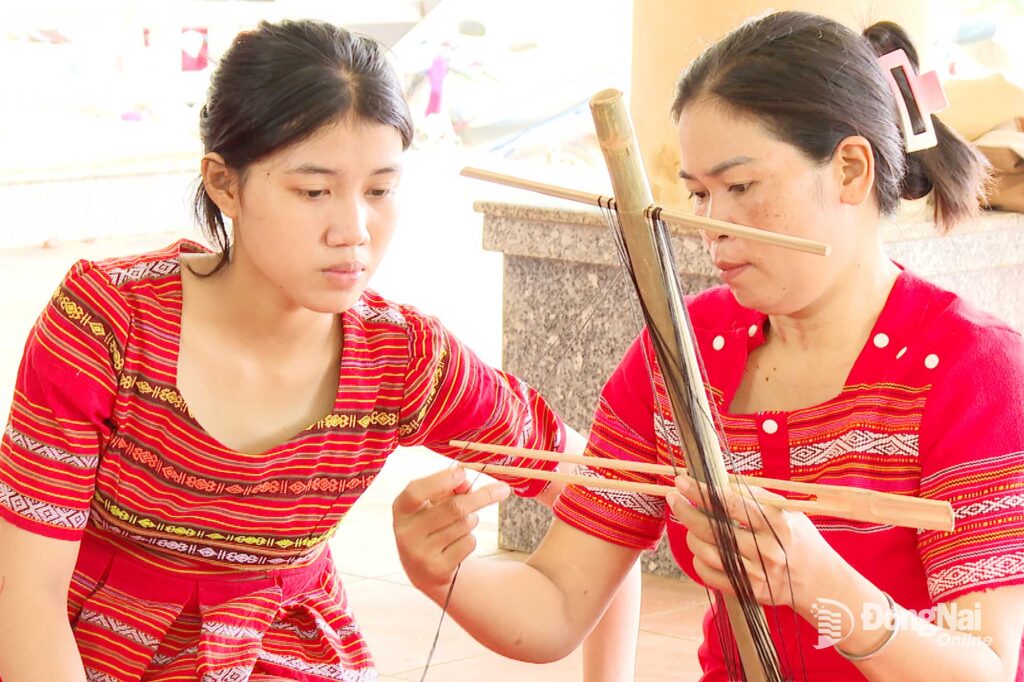
Promoting product sales encourages S’tiêng women to actively learn and preserve their traditional brocade weaving craft
Since the traditional brocade weaving craft of the S’tiêng and M’nông in Dong Nai was recognized as a National Intangible Cultural Heritage in February 2024, the movement to preserve and promote this heritage has become increasingly active across villages and hamlets in the province. Beyond simply maintaining the craft, local artisans have found creative ways to integrate brocade into modern life through innovative designs.
In Tan Hung commune, the model “Office Brocade Attire” launched by the local Women’s Union has become a highlight, spreading a strong sense of pride and love for traditional weaving. The redesigned office dresses and suits made from brocade are not only embraced by S’tiêng women but also warmly welcomed by Kinh and other ethnic groups. During each meeting, the vibrant garments, featuring traditional motifs yet modern silhouettes, create a strikingly colourful atmosphere. This is not only a renewal in appearance but also a symbol of solidarity among different communities in Dong Nai.
Leading this movement is Mrs. Thi Gion, a 61-year-old experienced weaver from Tra Thanh Lo O hamlet. Over fifteen years ago, she began experimenting with sewing machines to turn brocade fabrics into contemporary garments. “It was very difficult at first. The fabric was thick and stiff, so I had to try many times before I got it right. However, when people started praising my products and placing orders, I felt motivated to continue,” she recalled. From her initiative, the Brocade Startup Weaving Group was established, gathering more than 30 women to produce and supply the first modernized brocade outfits for the commune’s Women’s Union.
Encouragingly, the movement has expanded beyond Tan Hung. In March 2025, at the event “A New Day in Bom Bo Hamlet” held in Bom Bo commune (formerly in Bu Dang district, now part of Dong Nai province), 70 fashion outfits made from S’tiêng and M’nông brocade were showcased on the runway under the direction of renowned designer Minh Hanh. The event attracted widespread public attention, affirming the quality of traditional brocade products and opening new opportunities to promote them nationally and internationally.
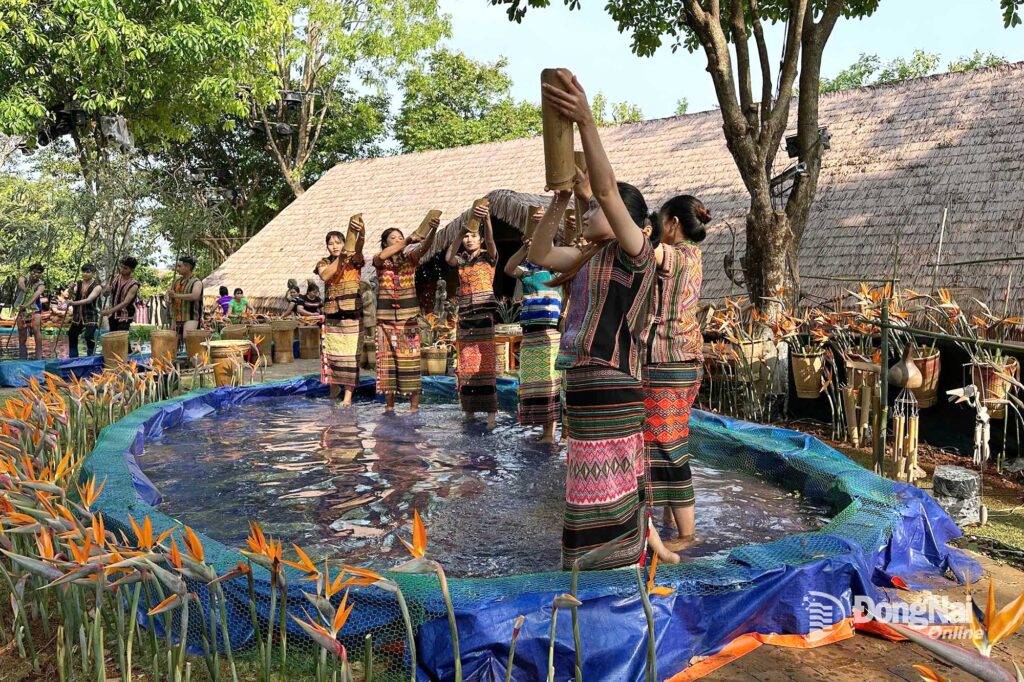
Modernized brocade costumes have been widely used in festivals
Currently, Tan Hung commune has three active weaving groups. With increasing demand, especially from female staff in local agencies and organizations, the weaving craft has secured a stronger position in modern life. Many products are now sold beyond the community, reaching distant customers and even international buyers through social media. This not only generates extra income for S’tiêng women but also rekindles their pride in their ancestral heritage.
Ms. Dieu Thi Hong, a S’tiêng woman, shared: “I wasn’t very interested in weaving before because it took too much time to make one fabric piece. Still now, seeing brocade turned into beautiful modern dresses, I realize how meaningful this craft is and decided to learn it again to preserve our tradition.” Meanwhile, Mr. Dieu Son Ray, an elderly artisan from Bu Dinh hamlet, continues to rediscover ancient motifs passed down from his ancestors. “Every pattern has its own meaning. If we preserve them, future generations will understand and appreciate our cultural identity,” he said.
According to Mrs. Le Thi Linh, Chairwoman of the Tan Hung Women’s Union, “The Office Brocade Attire model has created strong motivation for women to keep the craft alive. Once the products find a market, the weaving tradition can not only survive but also develop sustainably.”
The story of brocade in Tan Hung and Bom Bo today is more than just a revival of a traditional craft. It is a testament to the creativity of ethnic communities in harmonizing their cultural heritage with modern life, where every woven fabric is not merely a memory of the past, but a living expression of pride and identity, beautifully worn in the present.
Tourism Information Technology Center