
(TITC) – In the cultural flow of East Asia, filial piety has always been a core value. For the Chinese community, this value finds its fullest expression in the Vu Lan Festival, held on the 15th day of the seventh lunar month, also known as the Mid-Autumn Festival or the Ghost Festival. This occasion embodies both folk religious beliefs and traditions of gratitude and compassion, elements that shape its unique character while also blending seamlessly into Vietnamese cultural life.
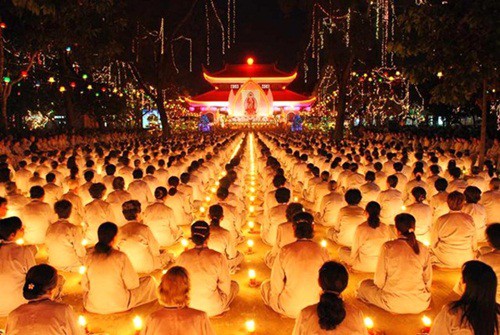
Origins and Rituals of the Hoa ethnic Vu Lan Festival
According to Hoa people’s belief, the 15th day of the seventh lunar month is when the gates of the underworld open, allowing wandering spirits to return to the human world. Offerings made during this time are not only to honor ancestors but also to provide for lonely souls with no relatives to care for them, bringing peace and prosperity to one’s family. Traditional offerings include incense, candles, tea, fruit, porridge, cakes, and poultry, as well as full vegetarian or meat-based feasts.
This custom, carried by waves of migration, has been practiced in Vietnam for centuries. At Hoa ethnic assembly halls and temples in Ho Chi Minh City, Tay Ninh, and several southern provinces, the Vu Lan Festival is often celebrated on a grand scale. The spiritual rites are accompanied by cultural performances such as lion and dragon dances, traditional opera, and theatrical plays, creating an atmosphere that is both solemn and lively – one that attracts not only the Chinese but also the Vietnamese community.
Meaning in Contemporary Life and Cultural Integration
Beyond being an occasion for descendants to honor and repay their parents’ sacrifices, the Hoa ethnic Vu Lan Festival also demonstrates the cultural blending between Chinese and Vietnamese traditions. While Vietnamese people emphasize filial devotion to parents in line with Buddhist teachings, the Hoa people highlight rituals for wandering spirits, reflecting compassion and generosity for all souls. When combined, these two aspects have given rise to a shared festival, one that both strengthens community bonds and nurtures the spirit of filial piety within each individual.
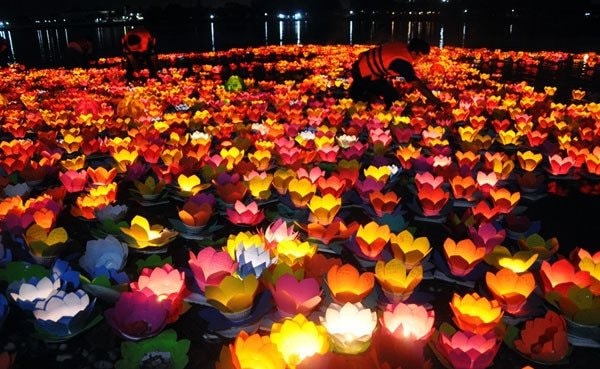
In modern life, Vu Lan is no longer celebrated only within the Chinese community. Many Vietnamese families now also prepare offerings for wandering souls, release floating lanterns on rivers, or join celebrations at Chinese temples. Through this exchange, Vu Lan has gradually become a “season of filial gratitude” for the entire nation, reminding people to cherish family bonds and practice kindness.
For the younger generation, the festival is more than a traditional ritual. It is a moment of pause in their fast-paced lives, a time to reflect, to express gratitude to parents, to share with others, and to connect with friends and community. Here, Vietnamese and Hoa cultures converge in their deepest humanistic values: love for family, respect for elders, and compassion as the foundation of happiness.
A Festival that Endures and Unites
Surviving across centuries, the Vu Lan Festival of the Hoa community in Vietnam has not only preserved its cultural essence but also blended into and enriched Vietnamese life. Amidst the bustle of modern society, it continues to echo its timeless message: honor one’s parents, love humanity, and live with compassion.
It is this beautiful cultural harmony that has made Vu Lan an inseparable part of Vietnam’s contemporary cultural landscape, a festival where filial piety and kindness transcend boundaries, binding together communities and generations.
Tourism Information Technology Center