
(TITC) – Among the distinctive culinary treasures of Vietnam’s Northwest Highlands, Tú Lệ green rice (cốm Tú Lệ) has long been a source of local pride, a symbol of the purity and natural fragrance that the land generously provides. Nestled beneath the majestic Khau Phạ Pass, the Tú Lệ Valley is famed for its golden terraced fields and aromatic glutinous rice terraces. From these “heavenly grains,” locals craft Tú Lệ green rice, a specialty that continually captivates visitors from everywhere.
(Photo: Lao Cai News)
What makes Tú Lệ green rice truly exceptional is the rare Tan glutinous rice variety, which thrives only on fields blessed with cool climate, fertile soil, and crystal-clear water flowing down from limestone mountains. When the rice grains reach the milky stage: plump, tender, and green, the harvest begins. This precise timing is essential to ensure the rice’s signature aroma and softness.
The Art and Craft of Making Tú Lệ Green Rice
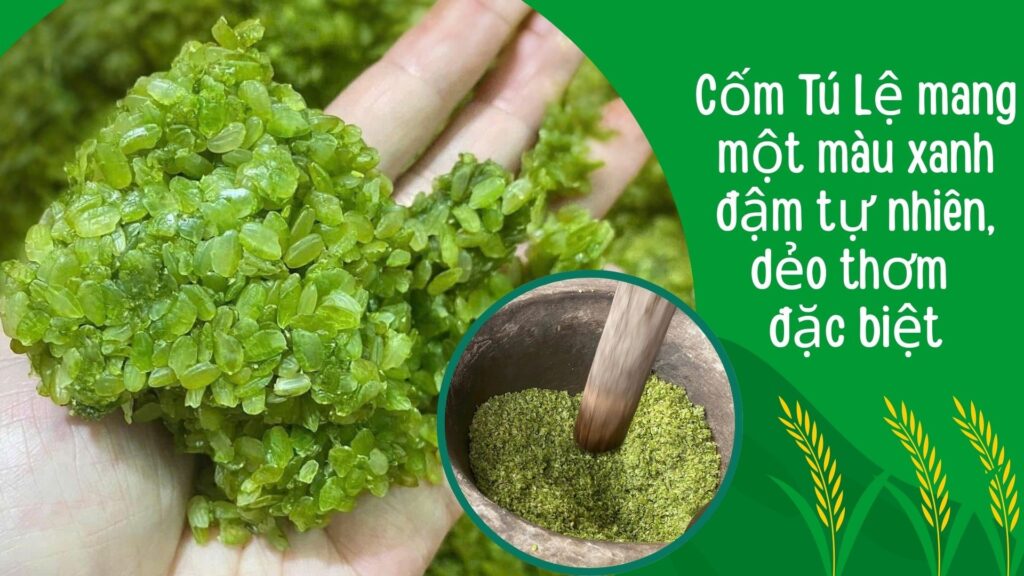
The preparation of Tú Lệ green rice demands meticulous care and skill. After harvesting, the rice is lightly roasted in a cast-iron pan over moderate heat, carefully stirred to prevent burning. The grains are then pounded in a stone mortar and sieved multiple times to remove the husk, leaving soft, fragrant, jade-green kernels. Freshly prepared rice is traditionally wrapped in dong or young banana leaves, preserving its freshness and releasing the gentle scent of young rice when opened.
The flavor of Tú Lệ green rice is subtle yet unforgettable, soft but not sticky, sweet and nutty with a refreshing lightness, lingering delicately on the tongue. It can be enjoyed on its own, or paired with ripe bananas for a richer taste. Locals also incorporate it into sweet soups, rice cakes, sticky rice, and bánh cốm, creating dishes that are at once rustic and deeply emblematic of the highland region.
Cultural Significance and Community Spirit
More than a food, Tú Lệ green rice is intertwined with the cultural and spiritual life of the Thái people. During the harvest season, villages resonate with the rhythmic sounds of pounding rice, laughter, and chatter, mingling with the aroma of fresh grains. These moments reflect gratitude to the land for its abundant harvest and a warm welcome extended to visiting guests.
(Photo: Lao Cai News)
From Local Markets to Nationwide Recognition
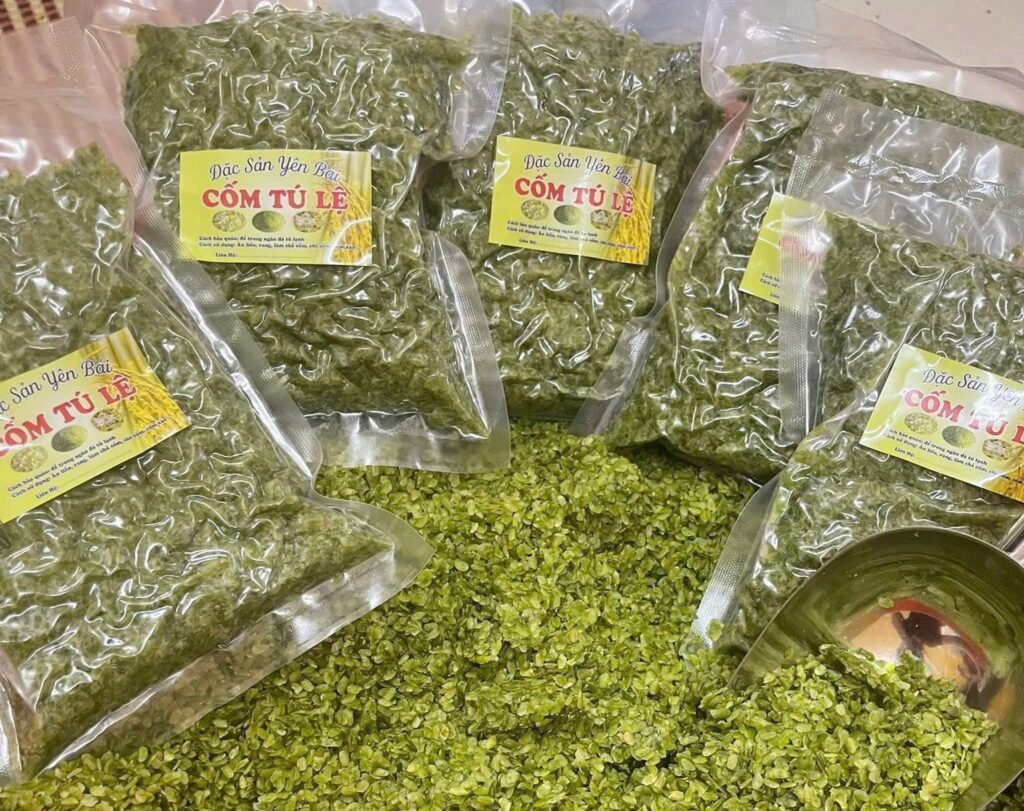
Today, Tú Lệ green rice is no longer confined to the local highland markets; it has traveled far and wide with traders to provinces and cities across Vietnam. Each package of vibrant green rice carries the essence of the Northwest mountains, making it not only a simple yet meaningful gift but also a culinary ambassador of the region. Tourists and food enthusiasts alike cherish it for its delicate texture, natural sweetness, and the subtle fragrance of young rice, which evokes memories of golden terraces and crisp mountain air.
Beyond its gastronomic appeal, Tú Lệ green rice has become a symbol of sustainable cultural tourism. Visitors to the region often participate in the rice-pounding ritual themselves, gaining firsthand experience of local agricultural practices, learning the meticulous craft behind each grain, and connecting with the rhythms of daily life in the Thái community. Through these immersive encounters, tourists leave not only with a packet of green rice but also with a deeper appreciation for the heritage, labor, and traditions of the highlands.
Moreover, Tú Lệ green rice represents a bridge between generations. The skills and knowledge involved in its production are passed down within families, preserving ancient agricultural techniques and maintaining cultural continuity. Every grain thus carries the stories of farmers, the wisdom of ancestors, and the beauty of a landscape carefully tended for centuries.
In this way, Tú Lệ green rice transcends its role as a simple snack or gift. It embodies the spirit of the Northwest highlands, celebrating the harmony between humans and nature, honoring community traditions, and inviting the world to savor the unique flavors and stories of a place where autumn leaves the fields golden and fragrant, and every bite tells a story of the mountains.
Tourism Information Technology Center