
(TITC) – In the rich mosaic of Vietnam’s 54 ethnic groups, the Chau Ro people form a unique and vibrant part of the nation’s cultural landscape. Mainly residing in Dong Nai Province and Ho Chi Minh City, the Chau Ro have long been connected with forests, fields, and nature, while preserving traditional values that enrich Vietnam’s cultural diversity.
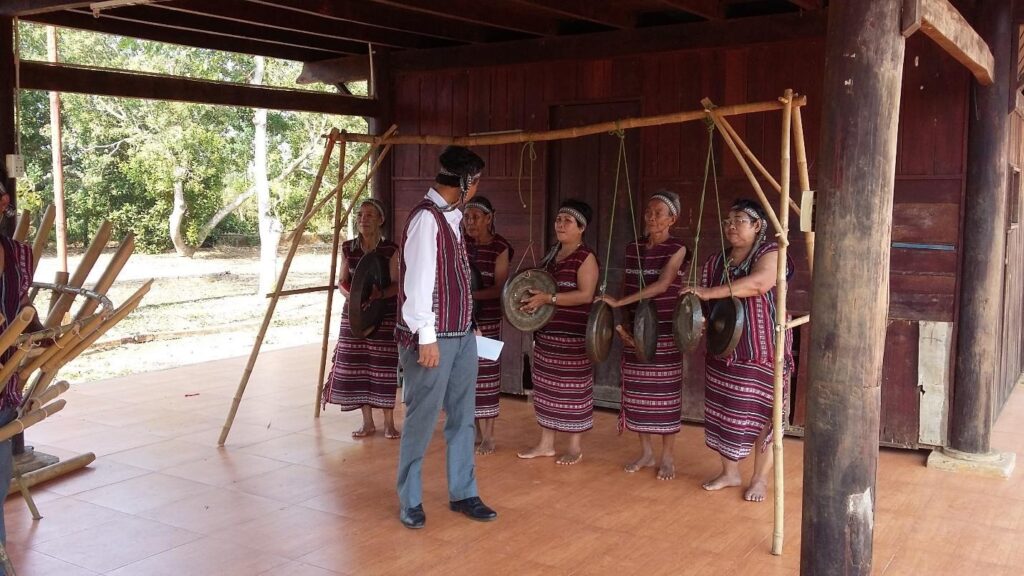
Practicing gong playing together. Photo: NVH
One of the most distinctive traditions of the Chau Ro is the Sayangva Festival, or New Rice Celebration. The festival is a time for the community to express gratitude to heaven and earth for favorable weather and fruitful harvests. In a sacred yet festive atmosphere, villagers wear bright traditional costumes, gather around jars of ruou can (rice wine), and join in joyful circle dances accompanied by the rhythmic sounds of gongs and drums. The festival is not only a spiritual ritual but also a vital social event where community bonds are strengthened and cultural values are passed from one generation to the next.
Music holds a special place in the Chau Ro’s spiritual life. Their gong ensembles, with their majestic, echoing tones, are central to major ceremonies and festivals. The sound of the gongs symbolizes unity, connecting humans with the divine and expressing the collective strength of the community. Even today, the art of gong performance remains a living tradition, carefully preserved and taught to the younger generation, ensuring that the music continues to resonate across time.
The traditional costume of the Chau Ro is simple yet elegant, reflecting their harmony with nature. Men usually wear loincloths, while women wear short blouses and long skirts decorated with colorful horizontal patterns. Although such attire is no longer used daily, it still appears proudly in festivals, weddings, and community gatherings. Each garment carries a sense of pride and belonging, representing the enduring spirit of the Chau Ro identity.
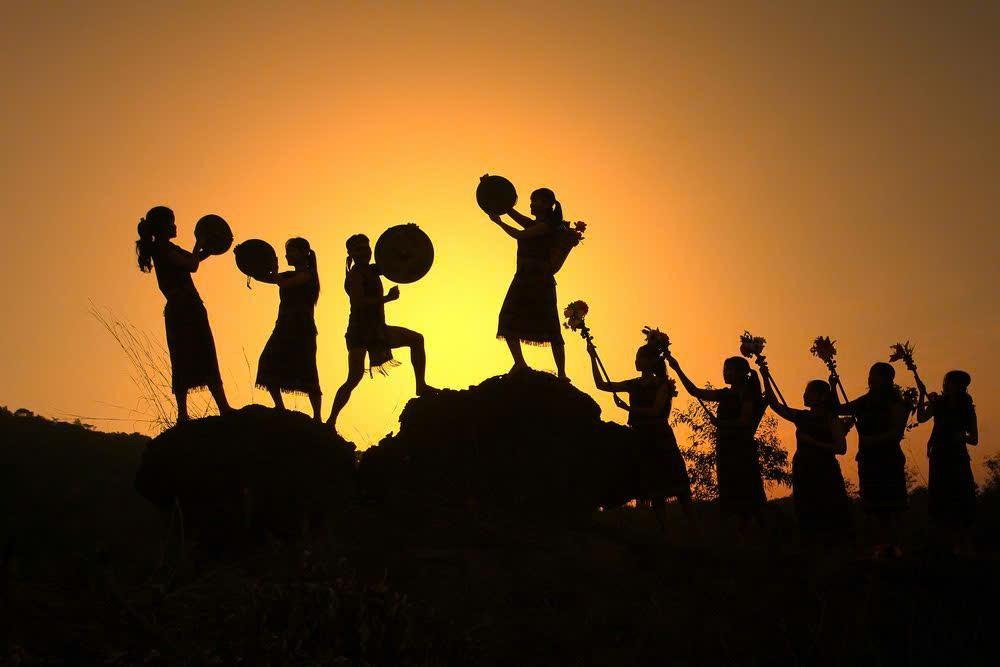
Sunset over the village. Photo: NVH
Amid rapid modernization and the pressures of urban life, the Chau Ro continue to uphold their customs with remarkable dedication. Their rituals, music, and traditional attire are not relics of the past but living expressions of faith, artistry, and resilience. Through the efforts of community elders, artisans, and local authorities, these cultural values are being revitalized and shared with younger generations.
By preserving the Sayangva Festival, the sound of the gongs, and their distinctive attire, the Chau Ro people demonstrate that cultural identity can thrive alongside modern development. Their traditions remain a bridge between past and present, a reminder that even in the fast-changing rhythm of modern life, the heart of a community beats strongest when it stays true to its roots.
Today, the efforts of local authorities and cultural organizations in Dong Nai Province have created new opportunities for the Chau Ro people to promote their heritage. Festivals, exhibitions, and educational programs introduce Chau Ro music, dance, and customs to a wider audience, allowing both locals and visitors to experience the beauty of ethnic diversity in Vietnam. Young people are also encouraged to learn traditional crafts, perform folk songs, and participate in community events, helping to ensure that the cultural flame continues to shine brightly into the future.
The preservation of Chau Ro culture is not only about maintaining ancient rituals or costumes, it is a living process that reflects pride, unity, and creativity. As the Chau Ro adapt to the modern world, they carry with them the echoes of their ancestors’ gongs and the spirit of the Sayangva Festival, harmonizing the past with the present. In doing so, they make a powerful statement: that cultural identity, when nurtured with love and respect, can flourish timelessly, becoming a source of strength and inspiration for generations to come.
Tourism Information Technology Center