
(TITC) – Visiting the Thai Hai Ecological Stilt House Village Conservation Area, travelers are immersed in the unique cultural life of the Tày ethnic people. More than just a tourist destination, Thai Hai is a true community, where people work together toward a shared goal: preserving Tày culture while welcoming visitors from near and far.
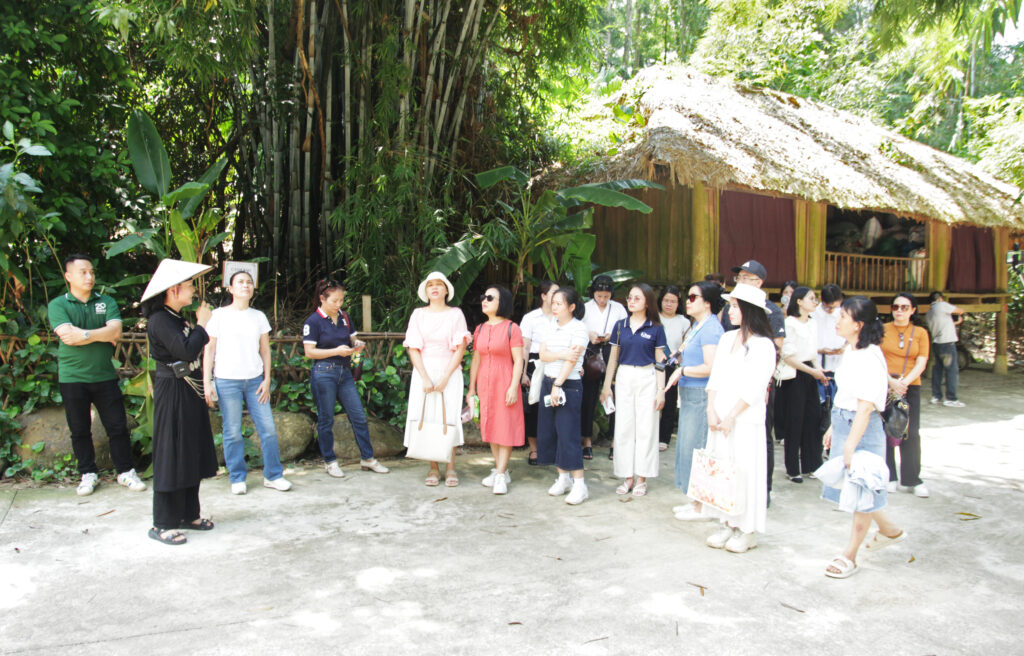
Visitors listen to an introduction about the Thai Hai Ecological Stilt House Village Conservation Area. Photo: TITC
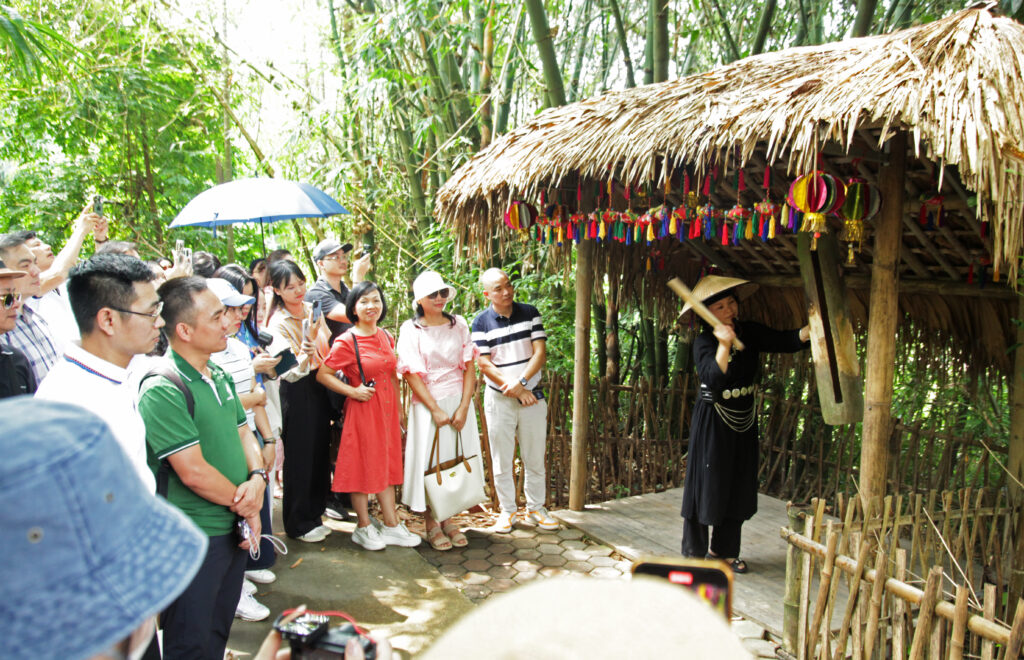
Tày ethnic people beat wooden gongs to announce the arrival of guests, following their traditional custom. Photo: TITC
Here, residents share everything from meals and income to the care of elders and the education of younger generations. Mention Thai Hai Village, and many tourists will immediately recall a model of successful community-based tourism, one that not only captivates visitors but also fills locals with pride.
Originally established to preserve the cultural heritage of the Tày people, Thai Hai Village has gradually become a place of cultural exchange and a beloved attraction for both domestic and international travelers. The site today includes various areas for conservation, cuisine, accommodation, entertainment, and events, offering visitors a comprehensive cultural and ecological experience.
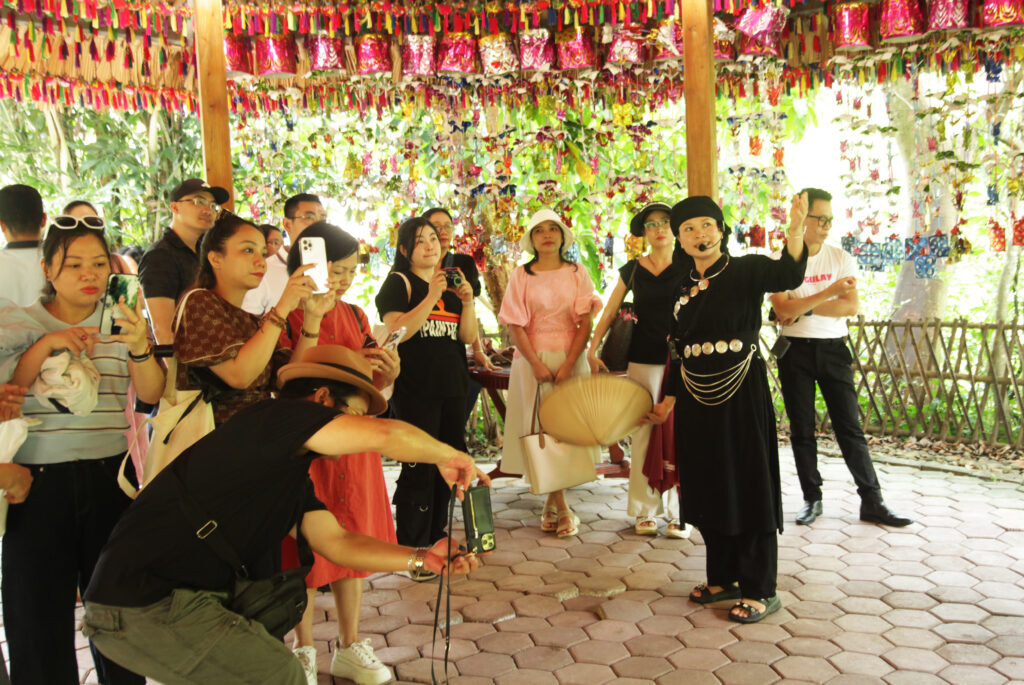
Ethnic people introduce lucky charm items reflecting Tày cultural traditions. Photo: TITC
At Thai Hai, visitors can enjoy the serenity of lush green nature, meet warm-hearted locals dressed in traditional indigo garments, listen to the gentle melodies of Then singing, and savor the distinctive flavors of Tày cuisine. The village has become a leading destination for ecotourism, community tourism, cultural experiences, and relaxation, all while preserving the authentic traditions of the Tày ethnic group.
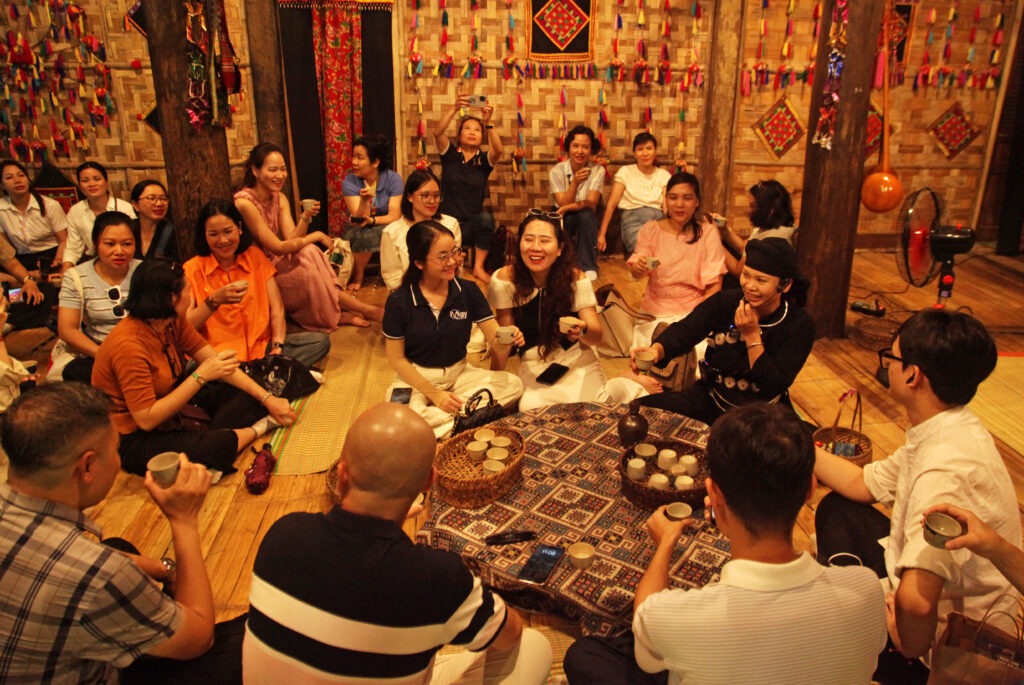
Visitors taste the wine and learn about the traditional distillation secrets of the local ethnic people. Photo: TITC
From a Preservation Dream to a Living Cultural Village
Founded by Ms. Nguyen Thi Thanh Hai, Thai Hai is the first privately operated tourism site in Thai Nguyen Province officially recognized as a local tourist destination. With immense dedication, Ms. Hai collected dozens of old Tày and Nùng stilt houses from the ATK Dinh Hoa region, relocating them to Thai Hai for preservation. Some of these houses are nearly 100 years old, each bearing its own historical soul.
She also spent years planting trees, restoring the land, and inviting Tày and Nùng families to settle in the village. Over time, the community grew and so did its influence, attracting an increasing number of visitors every year.
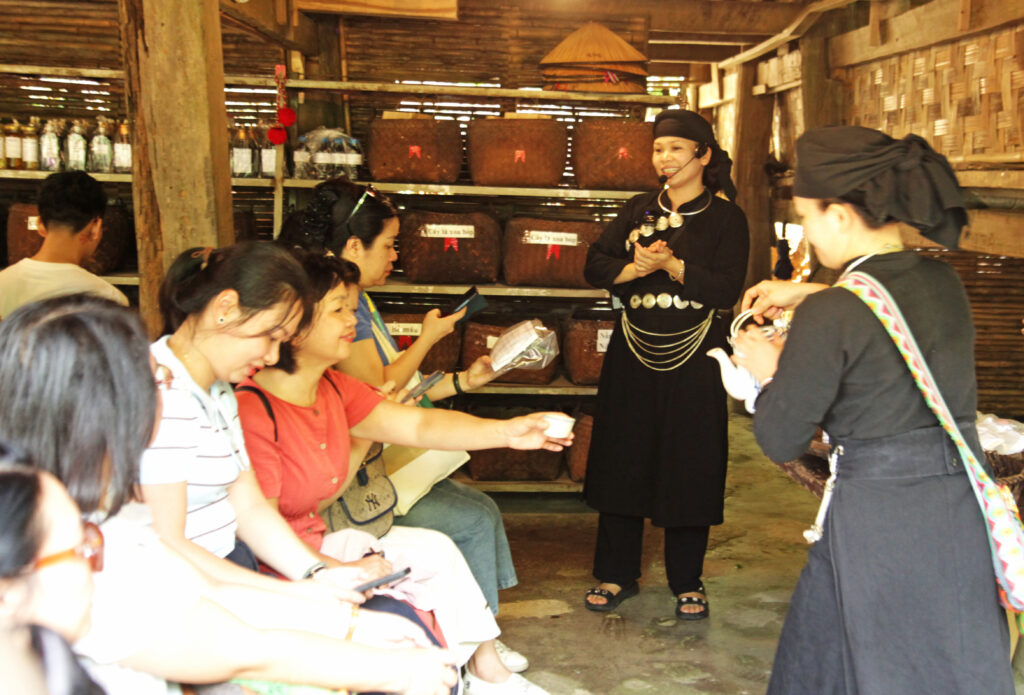
Ethnic people invite visitors to enjoy herbal tea at the traditional medicine house. Photo: TITC
Today, Thai Hai is home to 150 residents, including multi-generational families living under one roof. While originally inhabited by Tày and Nùng people, the village has since welcomed Kinh, Sán Chay, and Dao families, making it a truly diverse cultural mosaic. Nearly 30 stilt houses now stand in harmony, each serving a unique function: one for herbal medicine, one for green tea, another for rice wine, and others for preserving Then singing and other traditional crafts.
A Day in the Life of Thai Hai Village
According to Ms. Le Thi Nga, Deputy Director of the Conservation Area, the community lives together like members of a large extended family. Their daily activities include planting trees, growing vegetables, cultivating tea, raising livestock, and participating in tourism while safeguarding their cultural heritage.
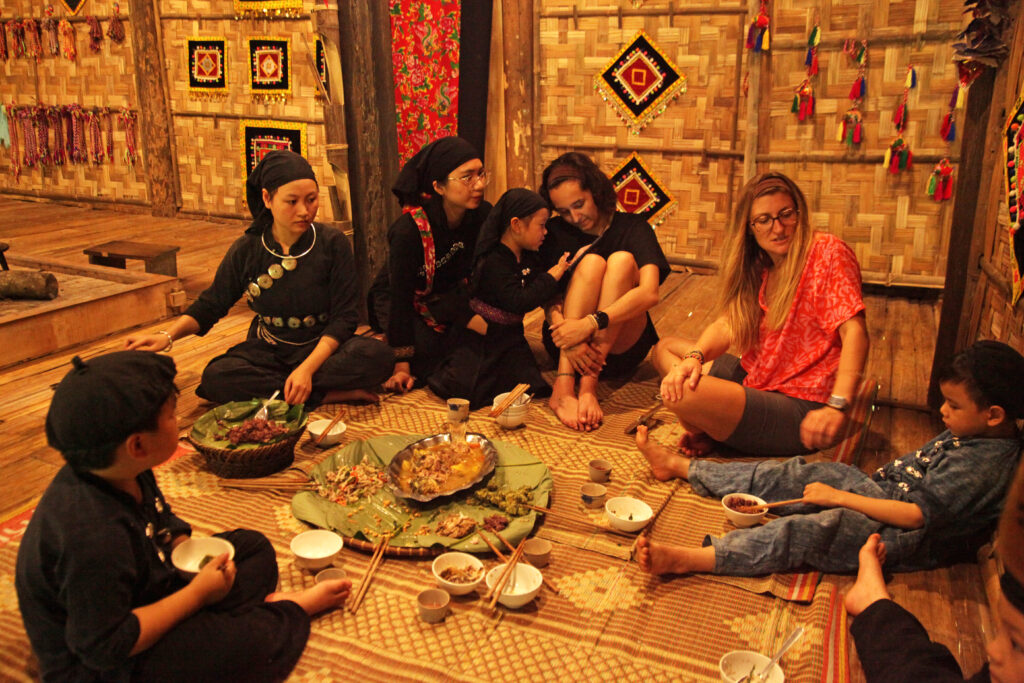
International visitors experience living and dining together with local ethnic people in their traditional houses. Photo: TITC
A typical day in Thai Hai begins at 5 a.m. with the sound of a wooden bell signaling dawn. Men light the kitchen fires and sharpen tools for a day’s labor. Women and girls fetch water from the communal well, prepare tea, and cook breakfast. After the morning meal, everyone goes about their tasks, gathering firewood, tending vegetables, caring for animals, fishing, or welcoming guests.
“We eat from the same pot, drink from the same stream, and care for one another like family,” said Ms. Nga. “On the first and fifteenth days of the lunar month, or during the New Rice and New Year festivals, the entire village observes traditional rituals together.”
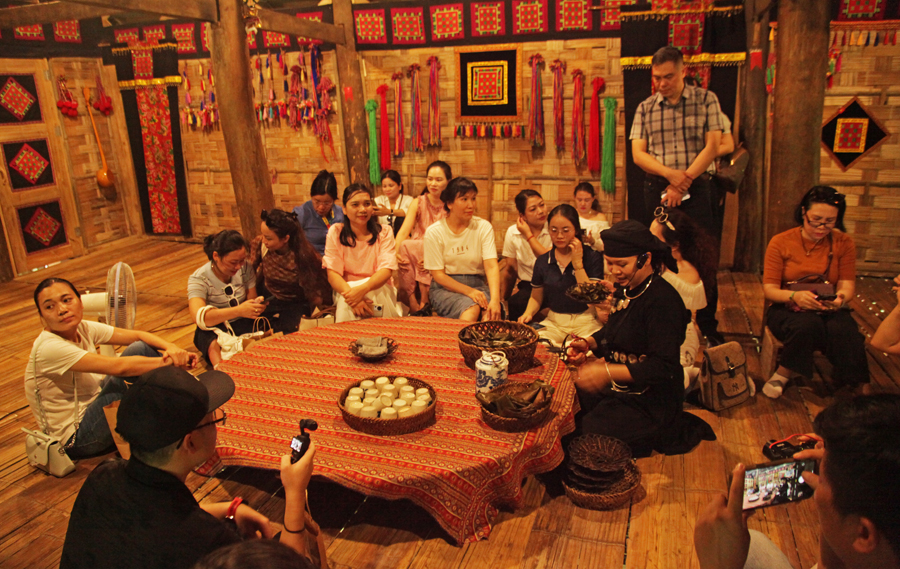
Visitors enjoy hands-on activities at the traditional cake house. Photo: TITC
A Journey of Discovery and Cultural Immersion
Exploring Thai Hai is an emotional journey through living traditions. Each stilt house preserves not just cultural heritage but also offers interactive experiences for visitors.
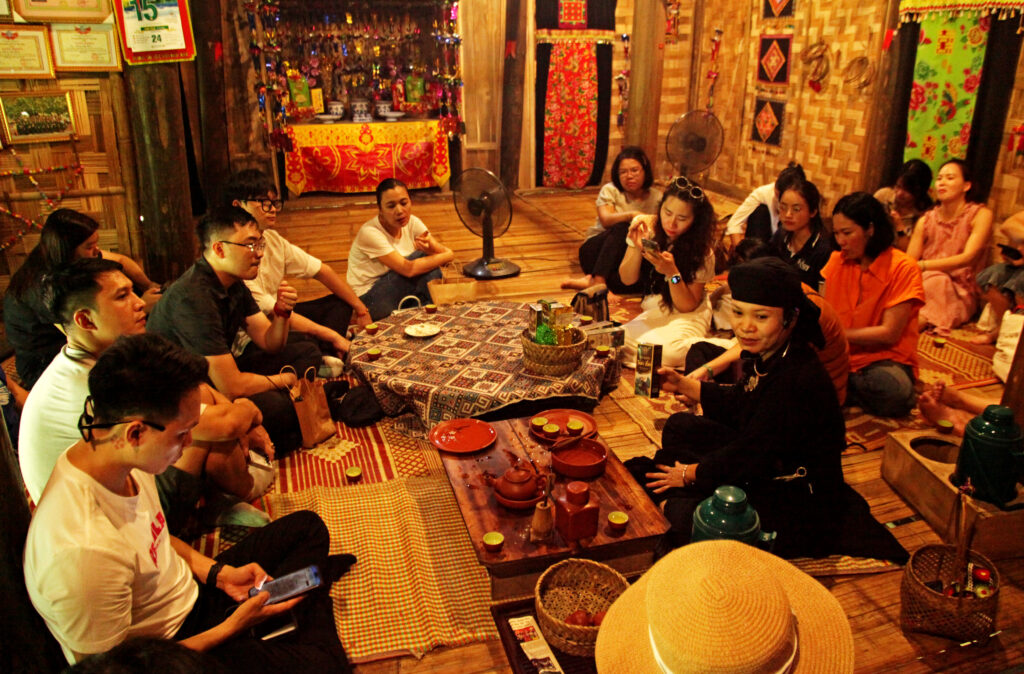
Visitors enjoy and learn about clean tea products made by the local ethnic people themselves. Photo: TITC
- The Herbal House invites guests to sip a cooling herbal drink while learning about the forest’s medicinal plants and the villagers’ ancient healing knowledge.
- The Tea House fills the air with the fragrance of freshly harvested green tea. Visitors can observe the process of growing, drying, and flavoring tea before enjoying a steaming cup paired with traditional bánh khảo rice cake.
- The Rice Wine House showcases the art of traditional distillation, where visitors can sample aromatic rice wine infused with forest herbs, accompanied by chewy, sweet chè lam cakes.
- The Cake House enchants with the scent of black bánh gai (glutinous rice cake wrapped in ramie leaves), handcrafted by Tày women. This is also the communal kitchen where villagers prepare festive foods like bánh chưng, bánh gai, and chè lam for both locals and visitors.
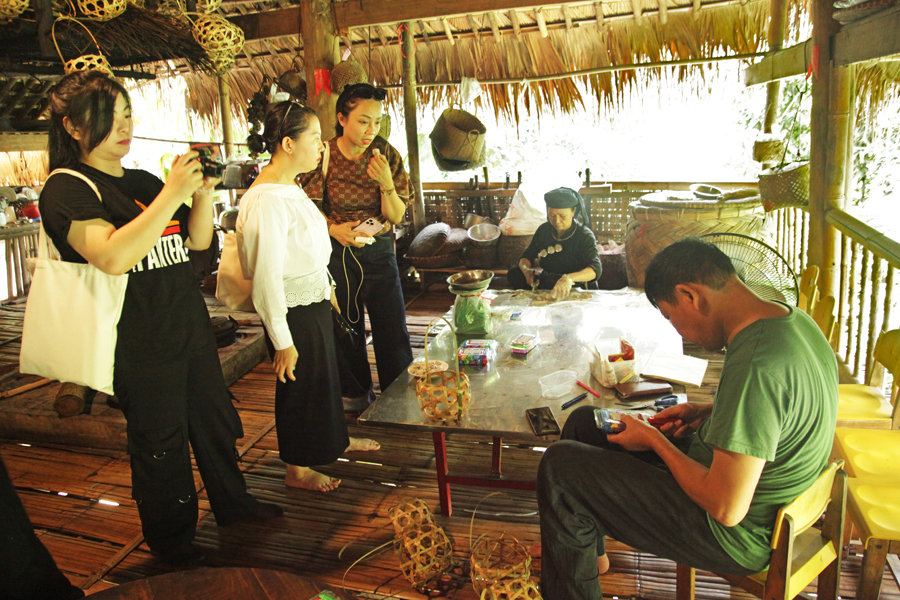
Local ethnic people make daily-use items and souvenirs for visitors by themselves. Photo: TITC
Guests can also admire skilled artisans weaving baskets, trays, and fish traps from bamboo, everyday tools that double as meaningful souvenirs infused with local spirit.
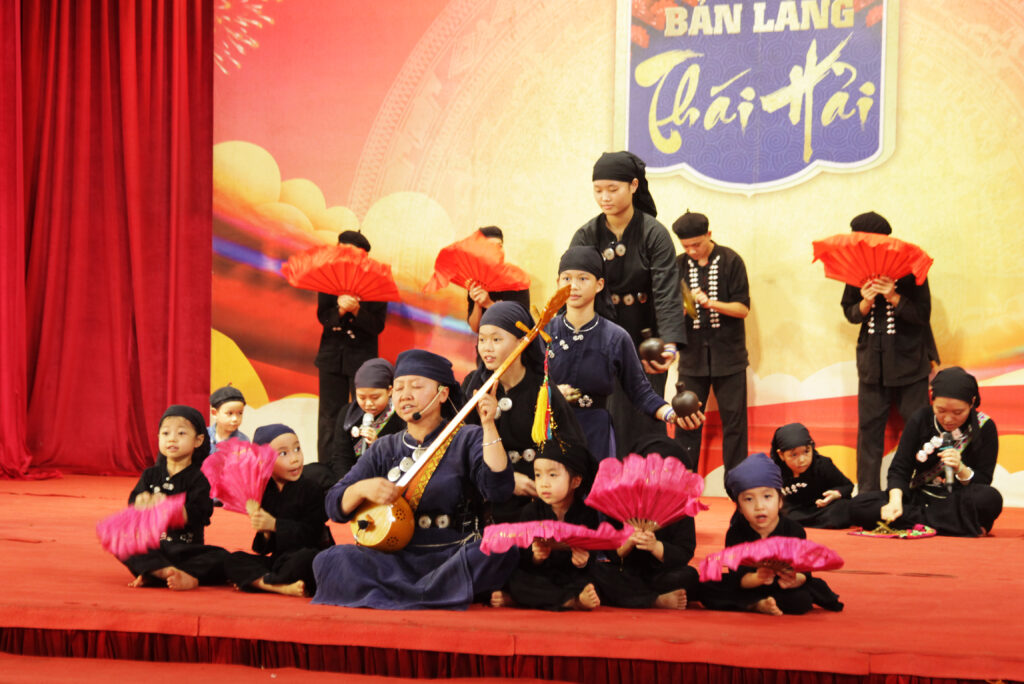
The community joins hands to preserve traditional culture. Photo: TITC
The village’s culinary experiences are equally rich, offering traditional dishes such as khau nhục (braised pork), roasted pig, stir-fried snails with bamboo shoots, and chicken sour soup, as well as adventurous delicacies made from peanut sprouts, bamboo worms, grasshoppers, crickets, snails, and lizards. Visitors can also join in festivals, folk games, and cultural performances, singing Then, playing tính lutes, or even helping villagers plant vegetables, pick tea, build stilt houses, cast fishing nets, or pound green rice.
Global Recognition and National Pride
In early 2023, the World Tourism Organization (UNWTO) honored Thai Hai Ecological Stilt House Village as one of the “Best Tourism Villages in the World 2022.”
Most recently, in September 2025, at the Vietnam Tourism Awards, Thai Hai was again celebrated, winning two prestigious titles:
- Best Restaurant Serving Tourists, and
- Best Community-Based Tourism Destination.
Tourism Information Technology Center