
(TITC) – Tết Nhảy (The Dancing Festival) of the Dao ethnic group in Thanh Hoa is one of their most important traditional rituals, held at the end of the lunar year to give thanks to Heaven, Earth, deities, and ancestors. It is a time to pray for good harvests, prosperity, and happiness. The festival harmoniously blends worship with dynamic dances and songs, reflecting deep respect for ancestors, strengthening community bonds, and preserving the rich cultural heritage of the Dao people.
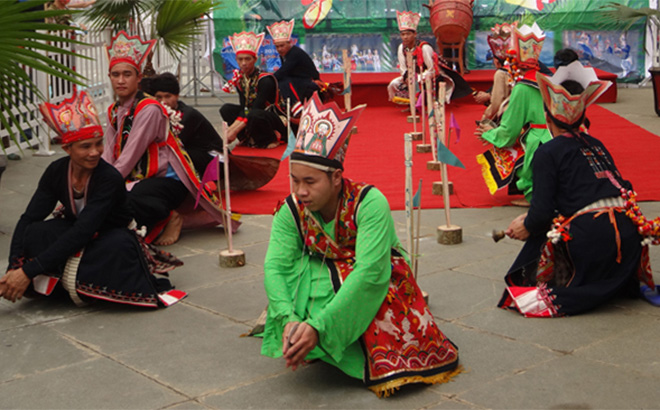
For the Dao, Tết Nhảy is above all a celebration of gratitude – to honor the ancestors and spirits who have protected and blessed their descendants with good health and abundant harvests. It is also a joyful occasion for families and the entire community to gather, offering prayers for peace and prosperity in the coming year.
Unlike the Lunar New Year widely celebrated across Vietnam, Tết Nhảy carries a deeply spiritual significance. According to tradition, it is not held annually but depends on the economic conditions of each family or clan – sometimes taking place every two to three years, or even once in ten or twenty years. Thus, whenever Tết Nhảy is celebrated, it brings an air of excitement, reverence, and anticipation to the whole village.
The most distinctive feature of Tết Nhảy is its ritual dance. After the shaman conducts the ceremony to report to the ancestors, the men of the clan perform sacred dances, each movement and gesture imbued with symbolic meaning – praying for fertile crops, healthy livestock, protection from evil spirits, and peace for the community.
The ritual may last for many hours, with dozens of dances performed continuously. The resounding rhythm of drums, gongs, flutes, and cymbals blends with the soulful Páo dung folk songs of Dao women, creating an atmosphere that is both vibrant and sacred. It is believed that through the dances and melodies, the ancestors witness the devotion of their descendants and bestow blessings upon them. The more participants and instruments involved, the more joyous, lively, and prosperous the festival becomes.
Traditional attire plays an essential role in Tết Nhảy. Dao men wear indigo clothing adorned with simple embroidered motifs, while Dao women appear in radiant, intricately decorated costumes complemented by gleaming silver jewelry. The color red – symbolizing luck and happiness – dominates their garments, headscarves, and ceremonial items, infusing the entire festival with warmth and festivity.
Beyond its spiritual rites, Tết Nhảy also features cultural performances and traditional folk games. Antiphonal singing, storytelling about the origins of the Dao people, and lively contests such as stick pushing, tug of war, and shuttlecock kicking create a cheerful, energetic atmosphere, bringing the community closer together.
For the Dao people of Thanh Hoa, Tết Nhảy is more than a festival – it is a “living museum” of their cultural identity. Each dance step, each drumbeat carries the people’s faith, hope, and love for their homeland. Preserving and promoting Tết Nhảy is not only the responsibility of the Dao community but also a shared mission to safeguard Vietnam’s diverse and enduring cultural heritage.
Tourism Information Technology Center