
(TITC) – High up in the northernmost corner of Vietnam, where mountains rise like ancient waves and the wind hums through limestone cliffs, lies Pa Vi H’Mong Village – a place where the Mong people live in harmony with stone and sky. Set in the heart of the Dong Van Karst Plateau, this small valley in Meo Vac District, Tuyen Quang Province, is not just a destination, but a living story – of resilience, tradition, and the quiet beauty of community life.
A Hidden Valley in the Sea of Stone
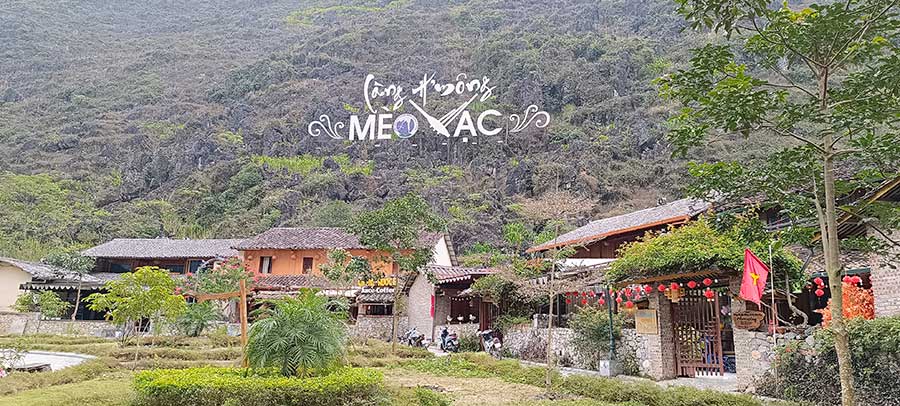
The road to Pa Vi winds like a ribbon through the cat-ear peaks of Dong Van. As the cliffs open, a valley unfolds – golden rammed-earth houses scattered among gray rocks, each framed by a low stone fence and the soft green of maize fields. The roofs, covered in yin-yang tiles, glow warmly in the afternoon sun.
Here, time seems to pause. The Nho Que River flows silently at the valley’s edge, mirroring the clouds that drift across the sky. The scent of wood smoke mingles with that of newly harvested corn. Somewhere, a bamboo flute rises and falls – tender, wistful, echoing across the slopes.
Pa Vi feels untouched, yet alive. The village was carefully planned to preserve the traditional architecture of the Mong people while embracing sustainable tourism. Every corner reflects the simplicity and grace of a life close to nature.
Culture Carved into Every Wall
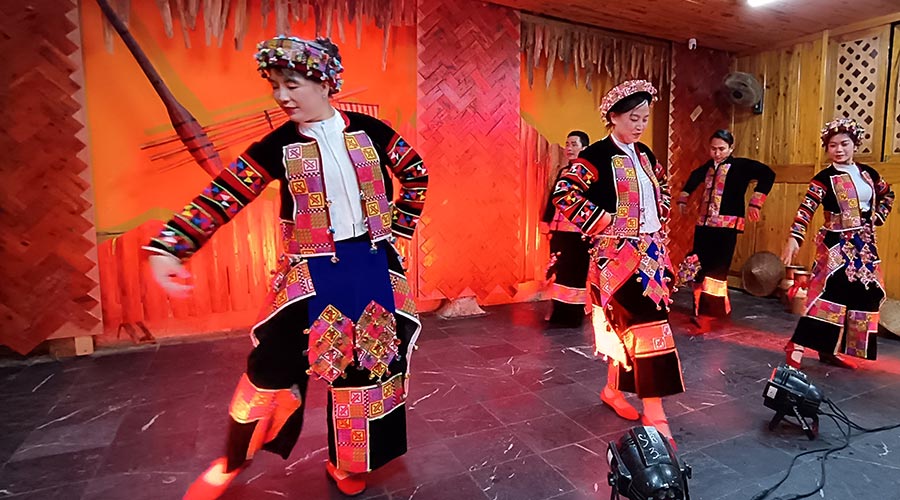
In Pa Vi Ha, heritage isn’t kept in museums – it breathes through daily life. The Mong people here still build their homes from earth and stone, sturdy walls that keep out the mountain winds and hold the warmth of generations. Inside, the ancestral altar occupies the most sacred place. Next to it stands a weaving loom, where women create colorful brocade cloths that tell stories through pattern and thread.
Visitors are invited not only to watch, but to join. You can knead dough for men men corn cakes, help distill fragrant corn wine, or learn to embroider the bright geometric motifs that adorn the Mong people’s clothing.
During festivals – especially Tet Gau Tao, National Day (September 2), or the Khen Mong Festival – the village bursts into color and rhythm. Young men play flutes, women sing love songs, children chase one another through the courtyards. Laughter and music fill the air, turning the rocky valley into a stage of joy and pride.
These celebrations aren’t performances for tourists; they are the heartbeat of the community – moments when tradition meets renewal.
Sleeping Beneath the Whispering Mountains
Nearly 30 households in Pa Vi now open their homes to guests. Each homestay is built in the Mong style – earthen walls, timber beams, tiled roofs – yet adapted for comfort, with soft bedding, clean bathrooms, and cozy courtyards.
At night, as the mist drifts in from the cliffs, travelers sit by the fire, sipping corn wine, listening to stories of love and legend. The mountain wind carries the sound of a flute across the valley. In the morning, the first sunlight glows on the limestone peaks, and you wake to the crow of roosters and the laughter of children heading to school.
Experiential tours like “A Day as a Mong Villager,” “Exploring the Dong Van Plateau,” “Rowing on the Nho Que River,” or “Conquering Ma Pi Leng Pass” weave together adventure and immersion, letting visitors truly feel life on the plateau – rugged yet full of warmth.
Where Heritage Meets Sustainability
Located within the Dong Van Karst Plateau UNESCO Global Geopark, Pa Vi H’Mong Village plays an essential role in the tourism network of the far North. From here, travelers can reach Ma Pi Leng Pass, Pho Bang ancient town, Lung Cu Flag Tower, or Sung La Valley – each a chapter in the story of Vietnam’s borderlands.
But what makes Pa Vi special isn’t just its location. It’s the way the community has turned cultural preservation into prosperity. Nearly 58,000 visitors came in the first nine months of 2025, with 40,000 overnight stays and total revenue exceeding VND 28 billion. Half of those guests were international travelers from countries like Canada, the U.S., Australia, and across Europe.
Tourism has changed lives here. The average household income has doubled or tripled, allowing families to rebuild homes, send children to school, and invest in new opportunities – all while keeping their traditions alive.
The sound of the loom, the taste of corn wine, the scent of wood smoke – these are not relics of the past, but threads of a sustainable future.
A Living Soul of the Stone Plateau
Standing on a hillside overlooking Pa Vi, one sees not just a village, but a vision – a harmony between past and present, between culture and livelihood. The gray cliffs, once symbols of hardship, now guard a story of revival.
Here in the land of stone and sky, the Mong people have found a way to turn their heritage into hope – welcoming the world while remaining true to themselves.
And as the evening mist settles over the valley, the flute rises again – soft, haunting, eternal – a song of Pa Vi that lingers in every traveler’s memory long after the journey ends.
Tourism Information Technology Center