
(TITC) – Amid the vast rocky expanses of the Dong Van Karst Plateau Global Geopark, there are stories never written in books or carved on pages, tales whispered by the wind, woven in indigo mist, and etched in silent stones weathered by countless seasons of sun and rain. These are the stories told through the art performance “Stories of Stone” at Nò Ah – The Seven Shades of the Plateau.
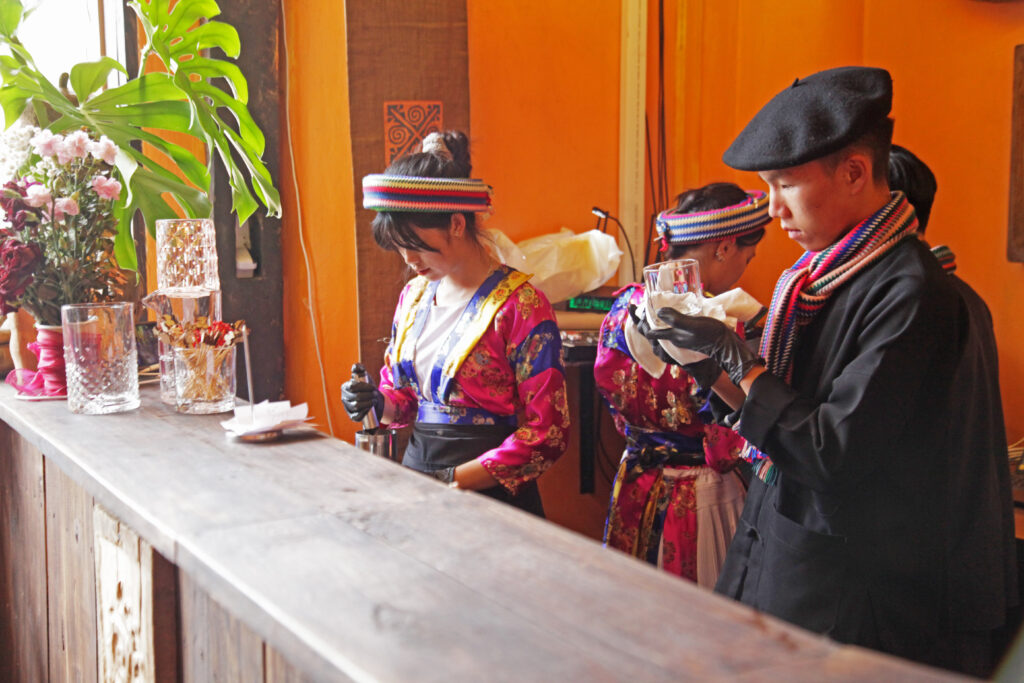
Rustic Dances Full of Life
The art program “Stories of Stone” at Nò Ah – The Seven Shades of the Plateau is a new tourism product of the Mèo Vạc – Tuyen Quang region, showcasing the vibrant cultural identity of local ethnic communities and offering visitors a unique cultural experience.
Here, the music, dance, and soul of the Mèo Vạc mountains are retold through art, in melodies of khèn (bamboo flute), in rhythmic footsteps, in gestures that breathe the life of the plateau. In the cozy space of a café rich in the local character of the Geopark, visitors are invited to listen, to watch, and to feel, to let their spirits drift between past and present, and touch the rustic yet powerful vitality of the people who live among the rocks.
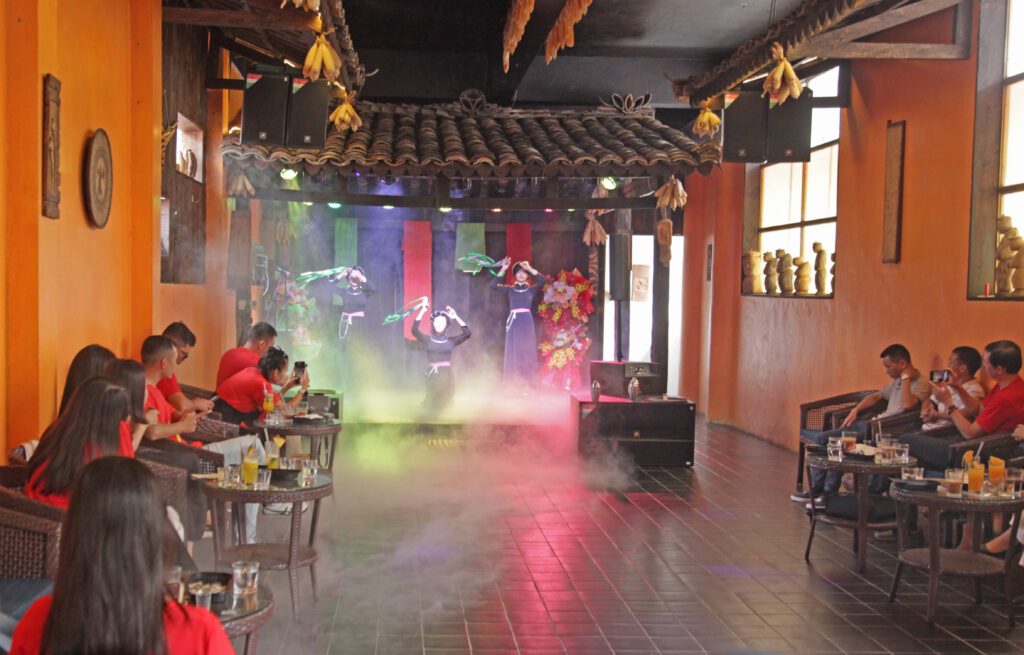
A performance program held in a café space rich in the cultural identity of the Dong Van Karst Plateau Global Geopark. Photo: TITC
Every performance is imbued with cultural depth. The stones, seemingly lifeless, have witnessed the footsteps of the H’Mông people migrating across mountains, preserved laughter from harvest festivals, and carried the echo of khèn songs calling for love. They have stood witness to love stories, weddings warmed by corn wine, and festivals bursting with colour.
From the graceful Tày dance “Charming Plateau” to the Lô Lô folk tale “The Dragon and the Man”, and the bright Lô Lô dances, every act combines to form a vivid cultural mosaic, rustic yet radiant, simple yet magical. Each performance tells a story, offering visitors a deeply emotional encounter with the spirit of the highlands.
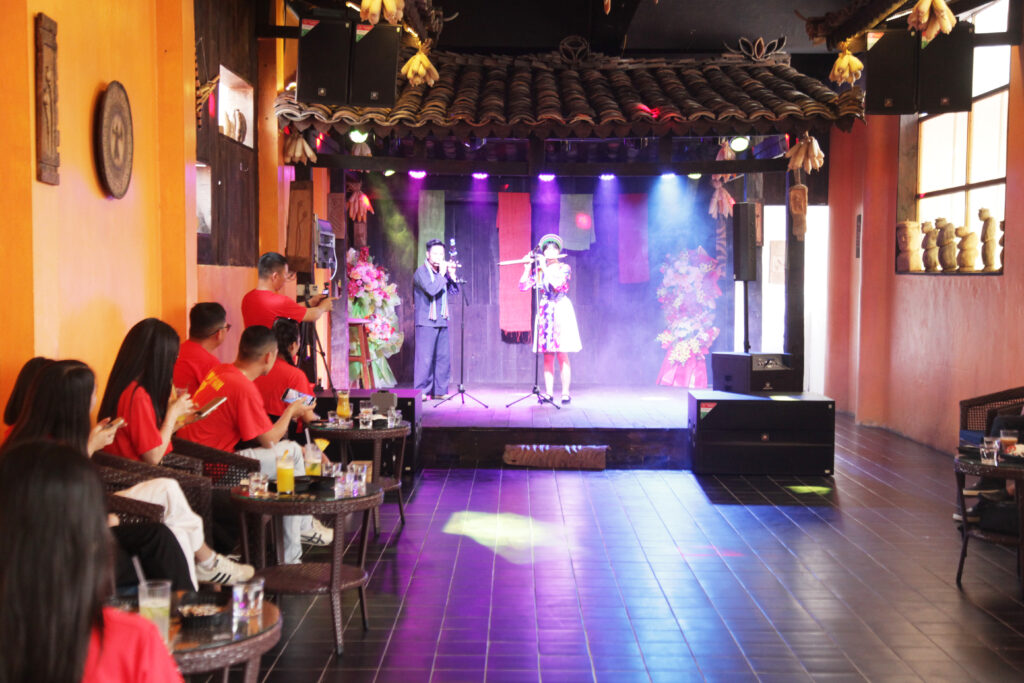
Performance of “Sáo Mèo Gọi Bạn” (The Hmong Flute Calling for Friends). Photo: TITC
All performances are brought to life by local villagers themselves, infusing their art with genuine passion and ancestral soul. While sipping a cup of local coffee, visitors can immerse themselves in this living cultural flow.
Above all, “Stories of Stone” reflects the heartfelt aspiration of the organizers, to preserve, celebrate, and transform local culture into a defining highlight of sustainable tourism development.
The H’Mông Wedding DanceIt is difficult to put into words the emotions stirred by each performance. Every act opens a door to another story, tender, stirring, and timeless.
One of the most captivating scenes is the “H’Mông Wedding Dance”, a four-minute performance blending storytelling and movement that draws every spectator into its spell.
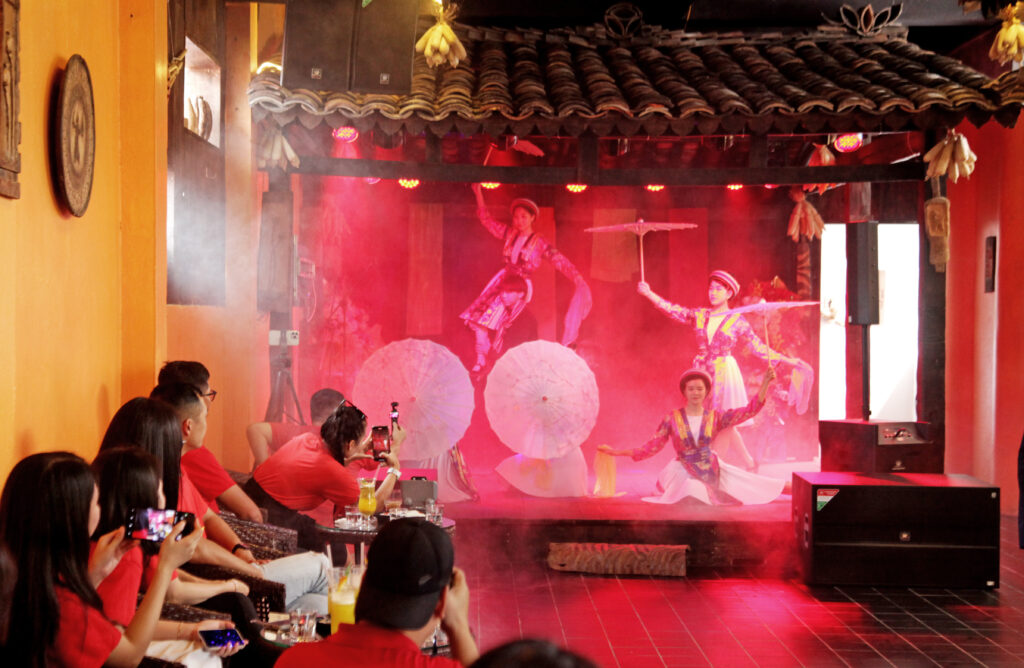
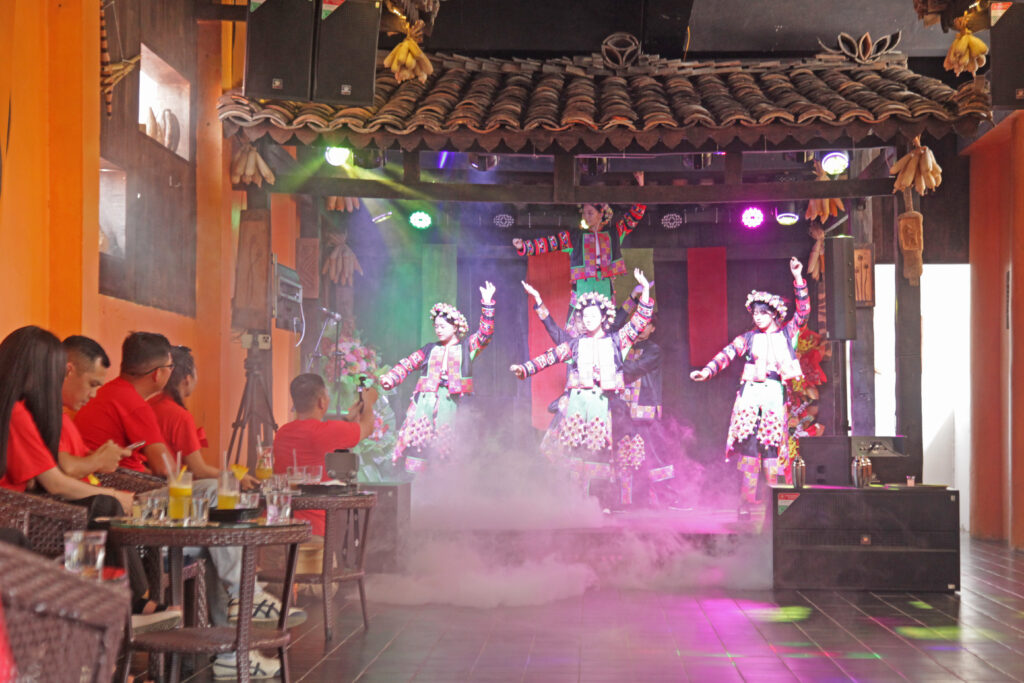
Rustic dances performed by the local ethnic people. Photo: TITC
The story begins high in the green mountains of the Geopark, where white clouds brush against the earthen walls of yellow clay houses, it is the wedding day.
The whole village bursts into color like a wildflower blooming in sunlight, alive with laughter, footsteps, and the melodies of the khèn celebrating love.
For the H’Mông, love is a gift from the mountains, a destiny carried by the wind, called forth by the sound of the khèn. In the bustling marketplace of vibrant skirts and bright smiles, two eyes meet like a mountain stream meeting moonlight. From that moment, the khèn becomes the voice of the heart, every note a confession, every rhythm a heartbeat echoing through the misty slopes.
When the couple decides to marry, the wedding date is chosen as carefully as the season for sowing seeds. Early in the morning, the winding paths through cornfields and cedar forests ring with the soft clatter of horse hooves. The groom carries humble gifts, a chicken, a jar of corn wine, an old khèn, tokens of sincerity and love.
At home, his mother gently whispers, “Bring her home, my son, so the village may grow brighter with laughter.”
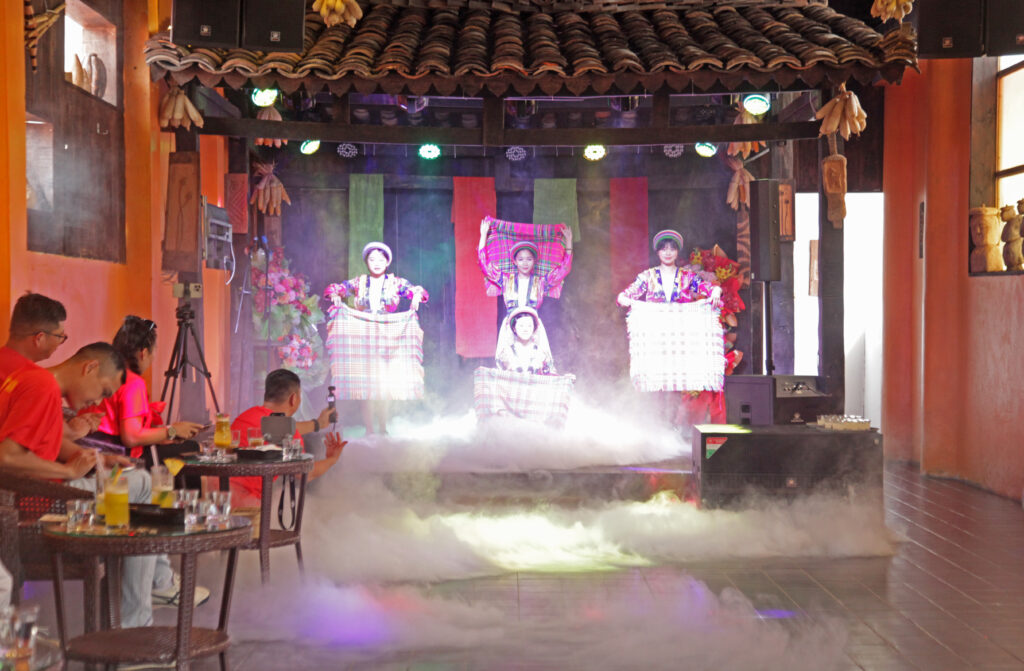
The art program contributes to preserving and promoting the cultural values of the Tày, Mông, and Lô Lô ethnic groups. Photo: TITC
The bride’s house welcomes them with warm smiles and the aroma of wood smoke. The village elder prays to the ancestors for harmony and happiness. The bride, shy in her dazzling embroidered dress, glows like the morning dew, pure, gentle, and sacred.
As dusk falls, the wedding procession winds back through the valley, accompanied by the wistful sound of the khèn. The bride turns back one last time, her eyes lingering on her childhood home but ahead awaits a new hearth, a new life.
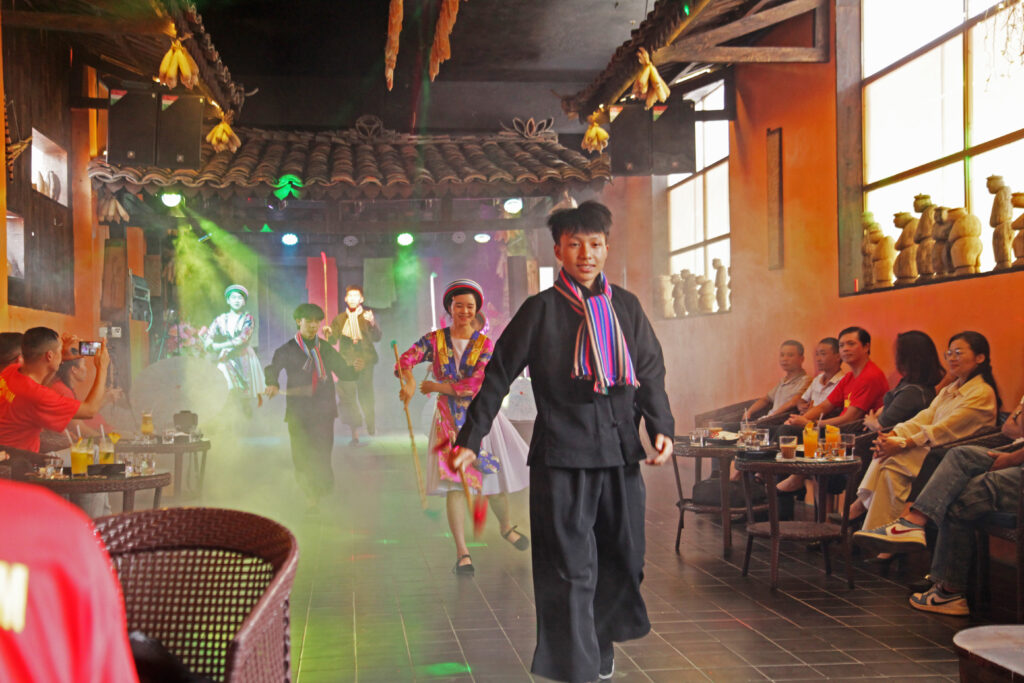
Generous Hmong men and lively Hmong women. Photo: TITC
Upon arrival, she steps over a basin of glowing embers, a ritual of purification and blessing. The elders say, “Step through the fire to leave behind misfortune and bring good fortune home.” The smoke curls upward, carrying the ancestors’ blessings to the young couple.
Night falls, the happiest night of the year. The scent of corn wine fills the air, drums beat in rhythm with laughter, and skirts whirl like forest flowers under the moonlight.
For the H’Mông, a wedding is more than the union of two souls; it is a celebration of community, a day when all hearts beat together in joy.
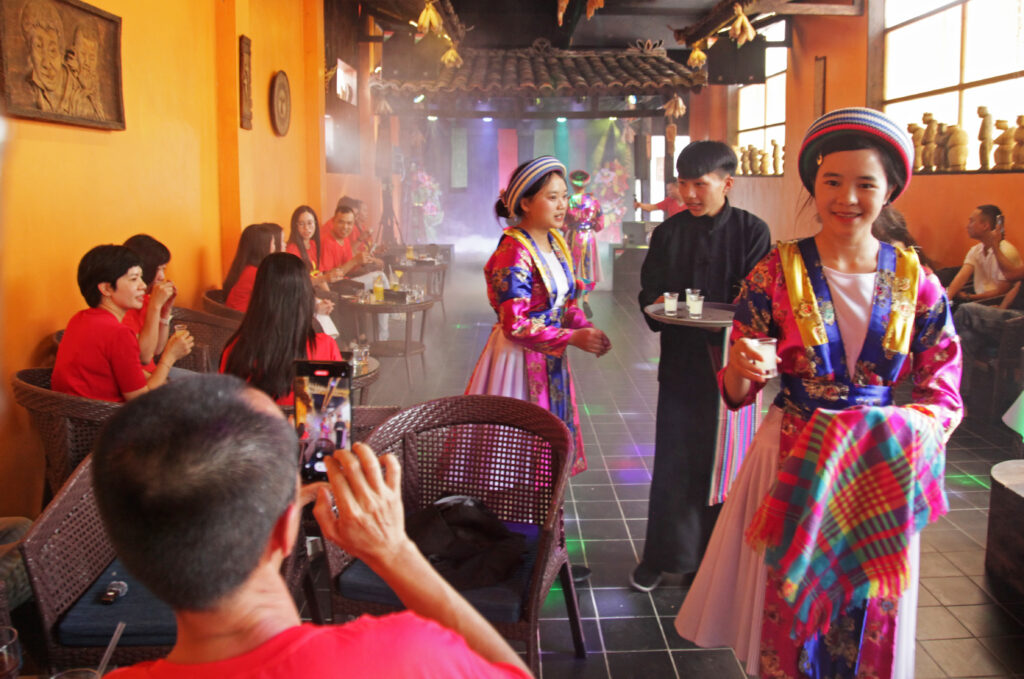
A dance conveying the story of a traditional Hmong wedding. Photo: TITC
When the moon rises over the mountains, the khèn plays once more, softer now, tender as a prayer carried by the night wind: “Let us grow old together, like the mountains that never part from the clouds.”
And though the wedding ends, its echo lingers, in the music of the khèn, in the bride’s shy smile, in the flicker of the fire under the highland sky.
Amid the endless seasons of mountain winds, another home, another song, another happiness quietly takes root on the plateau.
Tourism Information Technology Center