
(TITC) – On misty mornings in Tua Chua, a highland district of Dien Bien province, the echo of the khen – the Mong panpipe – rises from the stone plateau. Its melodies float between the mountains, sometimes gentle and wistful, other times bright and playful. For the Mong people, who make up more than 70% of Tua Chua’s population, the panpipe is more than music. It is the voice of their culture, a symbol of love, community, and resilience that has accompanied them through centuries.
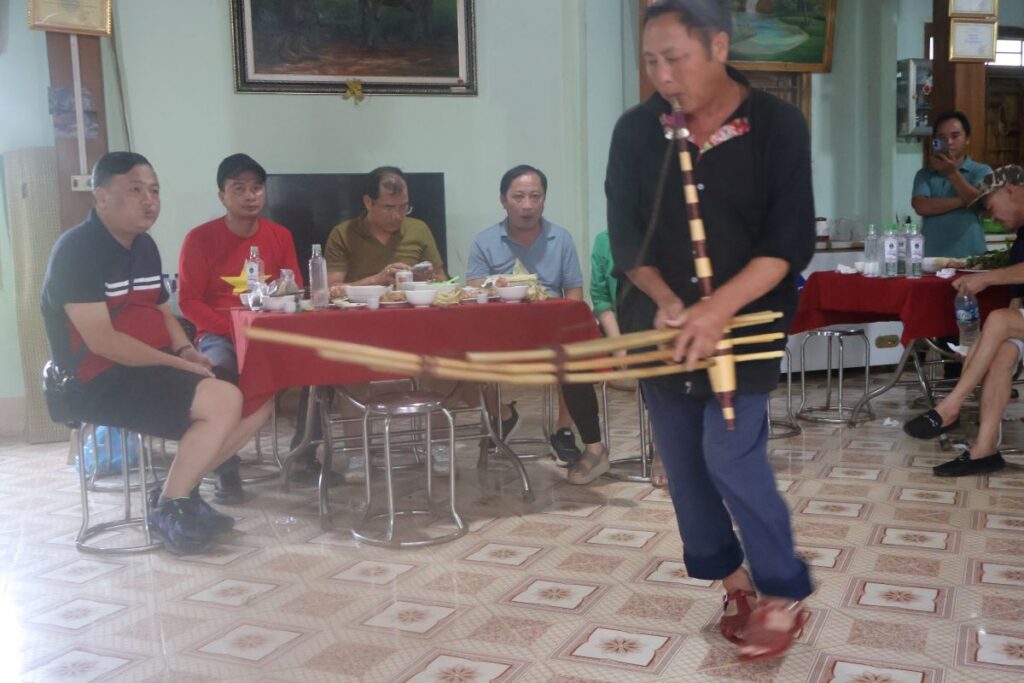
Photo: TITC
Music in the Blood
The Mong panpipe is unlike any other instrument. Its sound can carry longing, joy, or even prayer. It is played in festivals and rituals, in dances and courtship, and even in solemn ceremonies. Recognized in 2022 as a National Intangible Cultural Heritage, the panpipe is both a spiritual treasure and an everyday companion of the Mong community.
Travelers arriving in Tua Chua will quickly realize that the panpipe is not confined to stages or museums – it is part of daily life. During cultural festivals, the air is filled with music as men gather to play and dance, their steps echoing the rhythms of the khen. Visitors are often invited to join, circling the fire with locals, their laughter blending with the melodies that have echoed across the plateau for generations.
One of the best ways to experience Mong culture is to visit Sinh Phinh commune, home to a renowned Panpipe Team. Most adult men here know how to play, thanks to artisans like Meritorious Artist Sinh A Tau, who has devoted his life to teaching. “The panpipe is part of who we are,” he says. “If we don’t pass it on, we lose a piece of ourselves.”
In Hang De De village, guests can witness how panpipes are made. Under the guidance of artisan Sung A Cau, villagers gather to craft instruments together. Each person contributes a step: carving wood, fitting bamboo tubes, or tuning the delicate reeds. Those with more knowledge teach those with less, ensuring that everyone – young or old – can take part. For visitors, joining such a session is not only fascinating but deeply moving. It is a glimpse into a tradition where music and community are inseparable.
Creating a panpipe is both science and art. Bamboo, wood, and copper are carefully chosen, shaped, and fitted. The most challenging step is tuning the reeds so that every note resonates clearly. The instrument’s body is often carved with decorative motifs that tell stories of Mong heritage. Watching an artisan at work, with meticulous hands and patient focus, reveals just how much devotion lies behind each melody.
A Cultural Experience for Travelers
In recent years, Tua Chua has worked hard to keep the sound of the panpipe alive. The district hosts cultural exchange programs, artisan competitions, and performances during events like the Culture–Tourism Week. Visitors can attend these festivals, where panpipe music fills the air alongside traditional dances, colorful costumes, and local food.
Beyond the stage, cultural centers and museums have begun offering classes for both students and tourists, allowing outsiders to try playing the instrument or even attempt making one under artisan guidance. These experiences turn a simple visit into a journey of cultural connection.
To hear the Mong panpipe in Tua Chua is to feel the spirit of the highlands. It is music born from the land – sharp and rugged like the mountains, yet tender like the people who live among them. Around campfires, in village courtyards, or on the windswept cliffs, Mong men still raise their instruments and play, their notes blending with the landscape itself.
Life in Tua Chua is not without hardship, but the melodies of the khen remind both locals and travelers of endurance and joy. For visitors, it is an unforgettable experience – standing among the mountains, listening as music that has lasted centuries carries into the sky.
The Mong panpipe is not merely preserved – it is lived. Through artisans who teach, young people who learn, and festivals that celebrate, the instrument continues to resonate as strongly as ever.
For travelers, a journey to Tua Chua offers more than breathtaking scenery. It is an invitation to step into a cultural tradition that is alive, vibrant, and welcoming. And long after leaving, many carry with them the memory of those melodies – sounds that seem to echo not only in the mountains of Dien Bien, but also in the heart.
Tourism Information Technology Center