
(TITC) – When speaking of the cuisine of Vietnam’s northwestern highlands, one cannot overlook five-coloured sticky rice (xôi ngũ sắc). For generations, this vibrant dish has been an essential part of festivals, New Year celebrations, weddings, and other important community events. More than a delicacy, it embodies the faith, aspirations, and cultural identity of the ethnic peoples of the mountains.
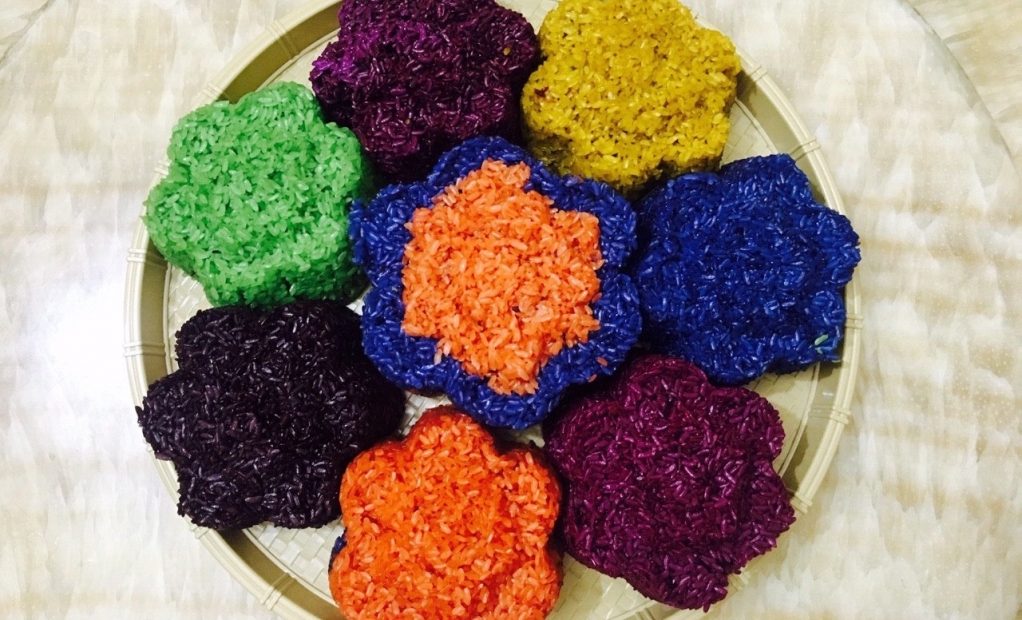
Five-colored sticky rice with vibrant hues made from natural vegetables and fruits. (Photo: Cao Bằng News)
Five-coloured sticky rice typically features five main hues: red, yellow, green, purple, and white. Each colour not only enhances the dish’s visual appeal but also carries deep symbolic meaning. According to the beliefs of the Tày, Nùng, and Thái people, the five colours represent the five elements of the universe:
- Wood (green),
- Fire (red),
- Earth (yellow),
- Metal (white), and
- Water (black or purple).
The harmony of these five colours expresses the balance between heaven, earth, and humankind, reflecting the hope for peace, prosperity, and happiness.
Natural Colours and the Craft of Creation
What makes five-coloured sticky rice truly special is that all the colours are derived entirely from natural ingredients. The process showcases the creativity and harmony between people and nature. Local people use leaves, roots, and fruits from the forest to dye the glutinous rice grains, resulting in a fragrant and healthy dish.
Common natural dyes include gấc fruit for red, turmeric for yellow, magenta plant leaves for purple, pandan or forest leaves for green, while the white portion keeps the natural colour of glutinous rice. The skill lies in carefully choosing ingredients and patiently preparing each batch to ensure the rice remains vivid, flavourful, and safe to eat, a true reflection of the delicacy and purity of highland life.
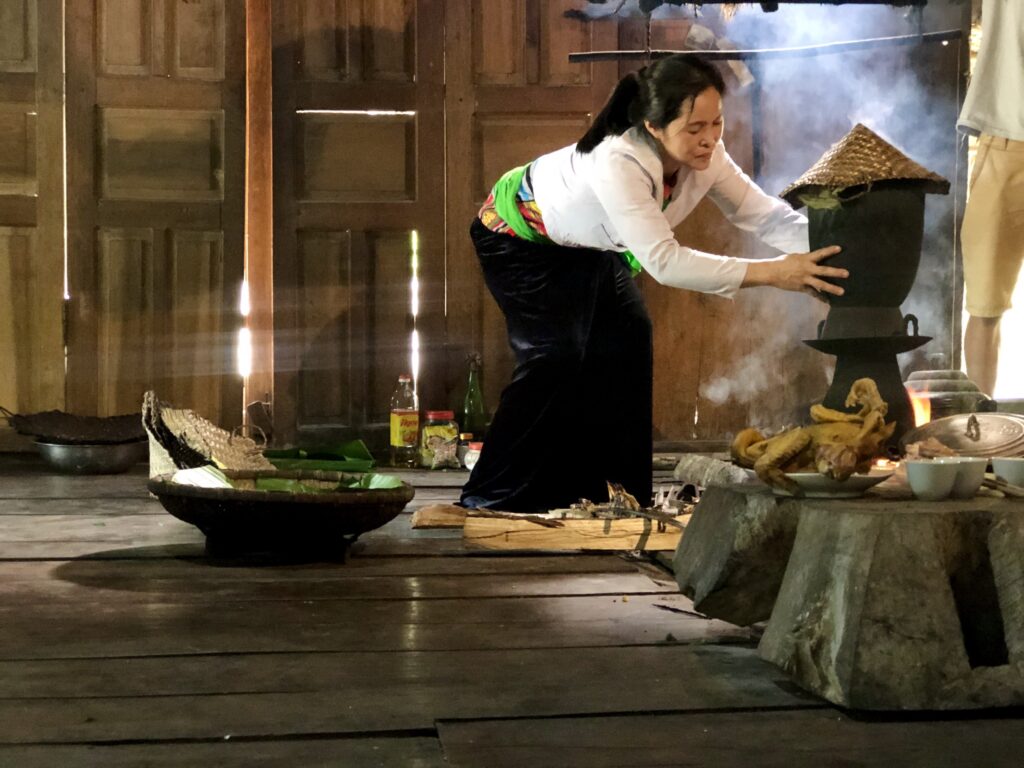
Ethnic people steam five-colored sticky rice in wooden steamers, preserving its fragrant, sweet, and rich flavor. (Photo: svhttdl.phutho.gov.vn)
The cooking process itself is meticulous. The mountain-grown glutinous rice must be well-selected, uniform, aromatic, and sticky. After soaking in the natural colouring extracts, the rice is steamed in a traditional wooden steamer, ensuring it cooks evenly and stays soft yet firm. The cook must be both patient and precise so that when finished, the colours remain bright and distinct, never blending together.
When presented, the five-coloured sticky rice is often arranged in the shape of a flower or layered in alternating hues, a striking edible artwork symbolizing harmony and joy.
A Dish Steeped in Spiritual Meaning
Beyond its beauty and taste, five-coloured sticky rice carries profound spiritual significance. Highland communities believe that eating this dish during festivals or at the start of the lunar year brings good fortune and prosperity. At weddings, it symbolizes enduring love and marital happiness. During ancestral worship, the colourful sticky rice tray represents the descendants’ gratitude and reverence for their forebears.
A Cultural Treasure and Culinary Ambassador
Today, five-coloured sticky rice is not only a part of daily life in the northern mountains but has also become a culinary symbol admired by visitors from across Vietnam and around the world. As a local specialty, it plays an important role in promoting the culture and people of the highlands to a wider audience.
Anyone who has ever tasted this dish will remember forever its fragrant glutinous rice, its naturally sweet and nutty flavour, and its brilliant, eye-catching colours, a perfect harmony of art, tradition, and nature.
Tourism Information Technology Center