
(TITC) – Nestled beside the poetic Suoi Cam Lake, surrounded by lush greenery and tranquility, the Dong Nai Museum (Binh Phuoc Ward) stands out as a unique destination for those seeking to explore the cultural depth of this land and its people. The museum not only preserves more than 14,000 artefacts and documents related to the history and revolutionary traditions of the former Binh Phuoc region but also dedicates a special exhibition space to honor the cultural identity of the S’tiêng – an indigenous community that has contributed to the distinctive cultural mosaic of Southeast Vietnam.
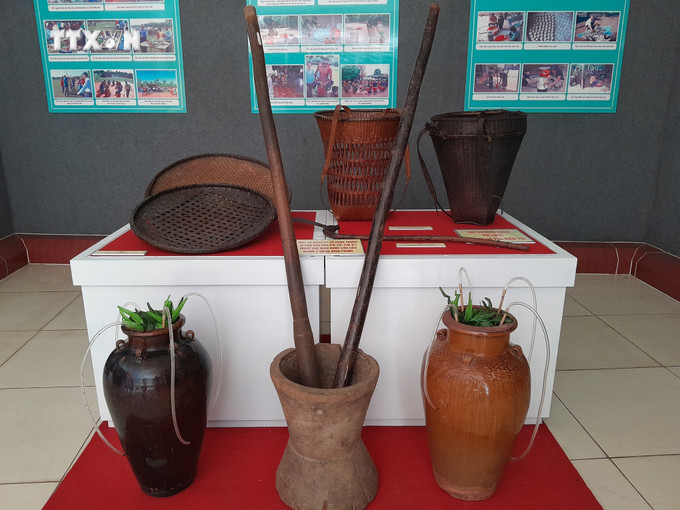
Household and production tools of the S’tiêng ethnic people
Stepping into the S’tiêng exhibition hall feels like a journey back in time, to the days when the S’tiêng people lived mainly in remote, borderland areas. Their daily lives: work, rituals, and beliefs were deeply intertwined with nature. From the rattan backpacks used to carry harvested crops, machetes for clearing fields, hunting bows, and jars for brewing traditional rice wine, to the brilliantly colored brocade textiles, each object reflects the S’tiêng people’s ingenuity and resourcefulness in utilizing natural materials. Every item displayed is more than just a tool of the past, it tells a story, a living memory of the S’tiêng’s way of life.
Currently, nearly 120 representative artifacts of the S’tiêng ethnic group are preserved and displayed at the Dong Nai Museum, ranging from hunting and fishing tools to household items, agricultural implements, and traditional musical instruments. Though simple in form, these artifacts carry profound cultural weight, they serve as tangible witnesses to a long historical journey and embody the close relationship between humans and nature, between labor and culture.
Through modern and engaging exhibition techniques, scientific display layouts, thoughtful lighting, sound effects, and vivid imagery, the museum breathes new life into each artefact, transforming them into interactive stories that captivate visitors.
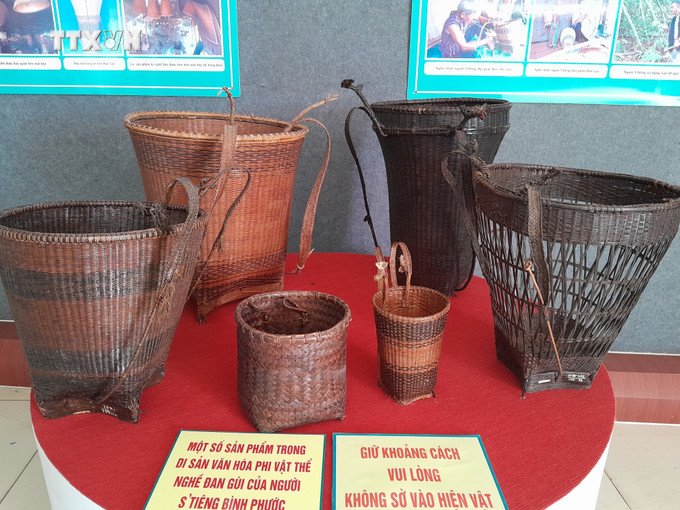
Carrying baskets used by the S’tiêng ethnic people
Beyond its role as a preservation space, the Dong Nai Museum also functions as a living classroom for younger generations. Each artifact tells a cultural story that helps students better understand their roots and the legacy left by their ancestors. As one visitor remarked, the exhibits here “no longer feel dry or monotonous” but instead “speak through form and colour,” creating an emotional and educational journey of discovery.
In today’s era of integration and modernization, as many traditional crafts and cultural practices of ethnic minorities risk fading away, the role of the Dong Nai Museum becomes even more vital. It is not merely a place that stores old objects but a “living archive,” a slow-motion film that connects the past with the present, allowing current and future generations to recognize and appreciate the enduring values of ethnic culture.
For the S’tiêng people, every gong, brocade cloth, and simple farming tool carries within it the spiritual essence of the community. When these objects are preserved and displayed in a dignified space, they not only affirm the uniqueness of S’tiêng identity but also contribute to the rich, diverse tapestry of Vietnamese culture.
Visiting the Dong Nai Museum, travelers don’t just observe, they immerse themselves in the cultural atmosphere of the S’tiêng. It is a space where time seems to pause, where memories come alive, and where the soul of an ancient culture continues to shine brightly amid the rhythm of modern life.
Tourism Information Technology Center