
When the first thunder rumbles across the mountains of Nghe An, the people of Vang Mon Village know that the new year has arrived. For the small O Du ethnic community – the least populous among Vietnam’s 54 ethnic groups – this sound marks not only the change of seasons but the awakening of nature, the renewal of life, and the beginning of the Cham Phtrong Festival, also known as the New Year’s Thunder Festival.
A Century-Old Tradition of the Highlands
For nearly a hundred years, the Cham Phtrong Festival has been the most important celebration of the O Du people, deeply rooted in their spiritual life and agricultural rhythm. It is held when the first thunder echoes through the valleys – usually between February and April – signifying that the Thunder God, their supreme deity, has awakened to bring rain and fertility to the earth.
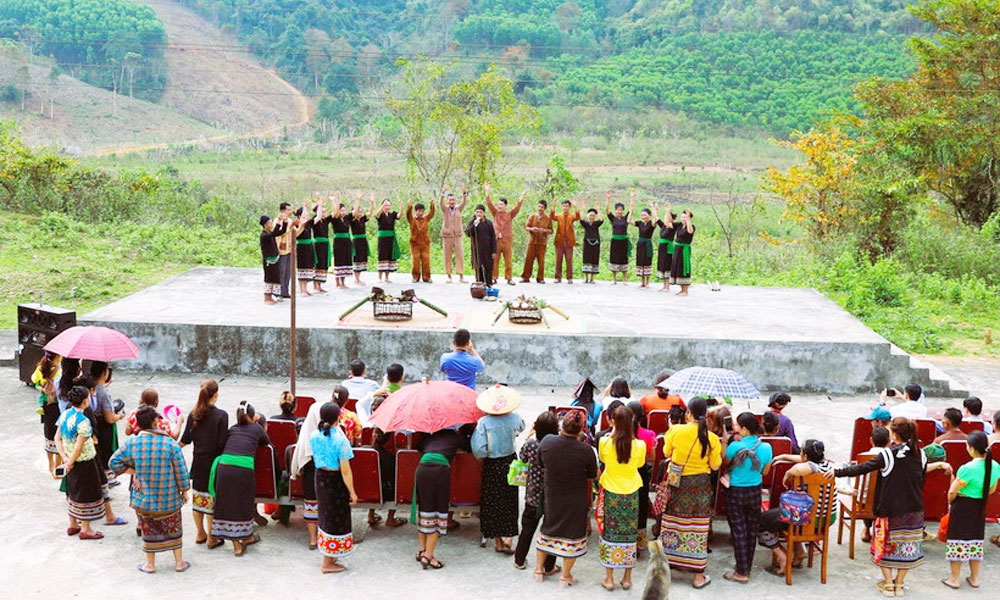
As dawn breaks over Vang Mon Village (Nga My Commune, Tuong Duong District, Nghe An Province), villagers in traditional dress gather at the central yard. Offerings are carefully arranged – sticky rice, chicken, river fish, and rice wine, alongside the meat of buffalo, goat, and pig – each symbolizing abundance and harmony.
At the home of the clan leader or village elder, a sacred fire is lit. Amid the curling incense smoke, the elder solemnly recites prayers to the Thunder God, asking for favorable weather, good harvests, and the health of the people. In that sacred moment, the O Du reaffirm their deep bond with the land, the forest, and the unseen spirits that have protected them for generations.
From Ritual to Celebration
Once the formal rites conclude, the atmosphere transforms into one of joy and unity. The entire village joins in a festival bursting with music, color, and laughter.
Elderly men share tales of ancestors and legends; young women dance gracefully in their vibrant, handwoven costumes; young men play gongs, drums, and flutes, their rhythms resonating through the hills. Around large jars of rice wine, villagers sit together, their songs rising with the evening mist – songs of love, friendship, and gratitude to the gods.
Folk games add a lively flair to the festivities. The con throwing contest tests agility and luck, while tug-of-war and crossbow shooting bring laughter and cheers. The bamboo dance – where participants rhythmically step between clapping bamboo poles – draws everyone into its joyful energy.
For many young people, the festival is also a time of connection and romance. In the playful back-and-forth of folk singing, new relationships often blossom. Over the years, countless couples have found love under the echo of thunder and the flicker of the ceremonial fire.
Preserving a Vanishing Heritage
In today’s fast-changing world, many customs of the O Du are facing the risk of fading away. Few young people speak the O Du language fluently, and some traditional rituals have been simplified. Yet, the Cham Phtrong Festival endures – its spirit carefully protected by the elders as a living testament to the community’s resilience and pride.
Recognizing its cultural value, Nghe An Province has implemented several programs to help the O Du preserve their intangible heritage. The festival’s revival has been integrated into the province’s cultural and tourism calendar, allowing both locals and visitors to witness the beauty of this rare ethnic tradition.
A Small Community, a Strong Identity
The preservation of the Cham Phtrong Festival represents more than cultural continuity – it is a story of empowerment. As the festival becomes part of community-based tourism activities, it provides new livelihoods for the O Du people while showcasing the vitality of Vietnam’s ethnic diversity.
Through the sounds of the gongs and the songs of the villagers, visitors not only encounter the beauty of an ancient belief but also witness the enduring spirit of a people who, though few in number, remain steadfast in keeping their identity alive.
Each year, as thunder rolls across the highlands, it carries with it a message of renewal – reminding both the O Du and all who visit their village that heritage, like the rain that follows the storm, continues to nourish the soul of the land.
Tourism Information Technology Center