
(TITC) – In the remote border valley of A Roang (A Luoi District, Thua Thien Hue Province), as night falls, the flickering firelight illuminates stilt houses and joyful faces gathered around jars of fragrant ruou can (rice wine). Amid the rhythmic echo of gongs and the warmth of community, the distinct flavors of Ta Oi cuisine awaken all senses, inviting visitors on a journey deep into the cultural heart of the mountains.
From homestays scattered across the valley, travelers flock to the old A Roang center – often called the “cultural heart” of the Ta Oi people. Here, the sound of gongs reverberates through the forest, the graceful Azưng Radoóc and Azưng Zêl dances come alive, and the air fills with the aromas of forest herbs, grilled meat, and sticky rice – a vivid reflection of mountain life, simple yet irresistibly captivating.
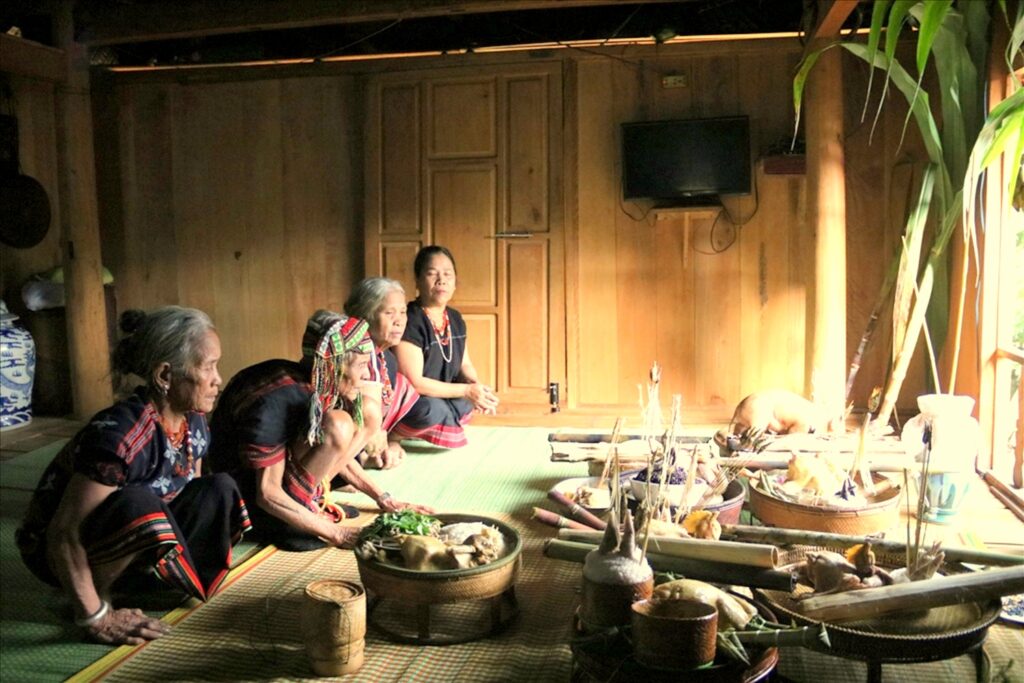
The Taste of Tradition
The first thing that leaves a lasting impression on visitors is ruou can and ruou đoak – two traditional Ta Oi wines fermented from forest leaves and sticky rice. With a mildly sour and sweet flavor, these wines warm the heart and foster a sense of connection. Under the glowing firelight, Ta Oi men and women invite guests to share a drink with genuine warmth, making each visitor feel like part of the village family.
For the Ta Oi, food is more than sustenance – it is a story of the mountains and forests, a rhythm of life in harmony with nature. Most dishes are made from local ingredients such as wild vegetables, upland rice, stream fish, and distinctive spices like forest pepper (axoar), young pomelo leaves (ala pis), wild betel leaves (lau loaq), or taro leaves (atâk). Together, they create flavors that are both unique and familiar, humble yet deeply aromatic.
The Meaning Behind the Dishes
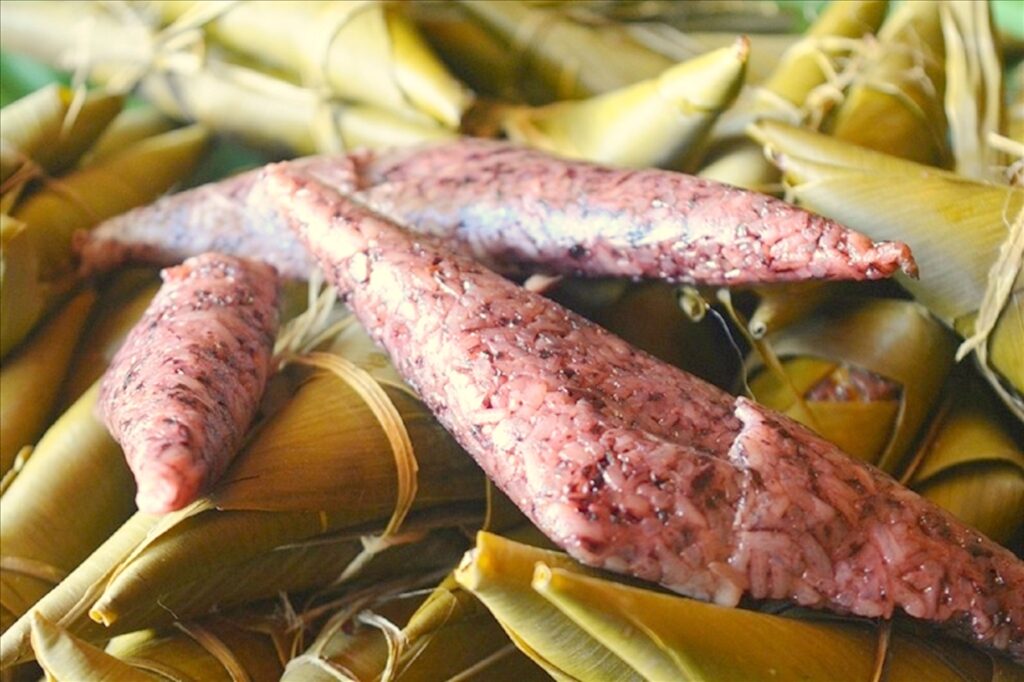
Among the treasures of Ta Oi cuisine, two traditional cakes stand out: a quát (buffalo horn-shaped cake) and a deep man (sticky rice sesame cake). A quát is not only delicious but also carries cultural symbolism – representing love and unity. Traditionally, when a Ta Oi girl marries, she prepares a pair of a quát cakes: one large (symbolizing the groom) and one small (symbolizing the bride). Made from upland sticky rice and wrapped carefully in banana leaves, the cakes reflect the bride’s skill and devotion to her new family.
Meanwhile, a deep man captivates visitors with its simplicity. It has no filling or added flavoring, yet its soft, fragrant taste – blending finely pounded sticky rice with roasted sesame – lingers pleasantly. The cake is shaped into a long block, sliced, and arranged in a circular pattern, symbolizing open arms welcoming guests from afar.
The “Jewel of the Forest”
A rare and cherished ingredient in Ta Oi cuisine is Cu Char black sticky rice, regarded by the Ta Oi and Pa Co people as the “sacred grain of the gods.” When freshly harvested, the grains shimmer with a deep black hue; when cooked, they remain glossy, sticky, and richly aromatic. From this rice, locals create signature dishes such as a deep ihoat (steamed sticky rice) and a deep ihoor (bamboo-tube rice), delicacies reserved for festivals and special celebrations.
From Heritage to Development
Today, tourism has become the “spark” bringing new vitality to A Roang. Homestays, schools, medical stations, and roads have been built, making life in this once-isolated valley more vibrant and connected. Cars now reach the villages, and electric lights shine in every home – dreams that once seemed distant to the highland people.
The integration of tourism and cultural preservation has helped elevate Ta Oi cuisine from humble village meals to recognized cultural specialties, shared proudly with visitors from across the country and abroad. Few places like A Roang have succeeded in “commercializing” indigenous cuisine in such a refined way – preserving authenticity while offering memorable experiences for travelers.
A visit to A Luoi offers more than sightseeing – it is a journey of the senses. Savoring a meal amid the great forest, sipping ruou can, and watching the Ta Oi’s gong dances allow visitors to fully appreciate the simple yet profound beauty of this ethnic community – a beauty resonating in every dish, every smile, and every heartbeat in harmony with nature.
Tourism Information Technology Center