
(TITC) – In the journey to discover the western region of Lam Dong Province, visitors are not only enchanted by its pristine nature but also deeply impressed by the distinctive cultural beauty reflected in the traditional costumes of the local ethnic groups such as the M’nong, Ma, and Ede. These garments are more than just clothing – they are a living expression of heritage, belief, and the artistic soul of the highlands.
Traditional Costume – The Soul of Indigenous Culture
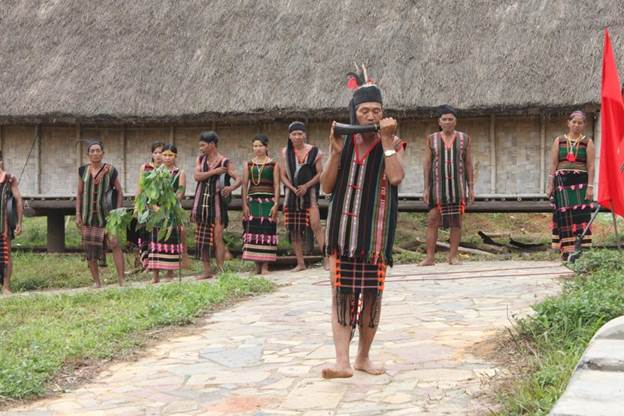
For the M’nong, Ma, and Ede people, traditional attire carries profound cultural significance. It is not simply daily wear but a symbol of pride, identity, and connection to their ancestors. Despite modern influences, local people still preserve their customs of weaving and wearing traditional clothes during festivals, ceremonies, and community events.
From a young age, girls learn the art of weaving and embroidery from their mothers and grandmothers. Each motif and color reflects both creativity and cultural memory, while the skill of weaving is often considered a mark of a woman’s dexterity and grace before she starts her own family.
The M’nong costumes, typically consisting of skirts, loincloths, and short shirts, showcase earthy tones and geometric patterns inspired by spiritual beliefs and daily life. The Ede people, on the other hand, favor striking decorative motifs derived from nature – fern leaves, lizard eggs, dragons, and other symbolic shapes. These are stylized into intricate V-shaped, diamond, or square patterns that embody harmony between human and nature.
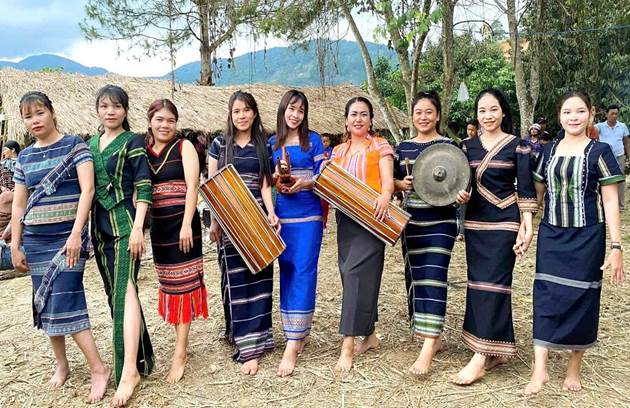
The Ma people’s costumes are also distinctive, featuring long wrap-around skirts, pull-over shirts adorned with vibrant geometric patterns, and well-balanced color combinations. Men usually wear traditional loincloths and short-sleeved shirts that highlight the strength and simplicity typical of the highlands.
In addition to these groups, the Mong, Tay, and Nung communities living in the region have also preserved their traditional clothing. During festivals and celebrations, their colorful outfits light up the mountain villages, creating a spectacular cultural landscape that attracts photographers and travelers alike.
Traditional Attire as a Highlight of Community-Based Tourism
In recent years, local authorities in western Lam Dong have made significant efforts to preserve and promote the value of traditional costumes through community-based tourism. In many villages, visitors can experience the local culture not only by observing but also by participating – trying on traditional outfits, learning weaving techniques, or joining workshops on hand-sewing and natural dyeing.
These activities allow tourists to appreciate the intricate craftsmanship behind each piece and understand how every thread carries the spirit and identity of a people. They also help generate income for ethnic communities while encouraging younger generations to value and maintain their heritage.
Cultural festivals and spring celebrations in the region often feature traditional costume shows and competitions. These events are not only a stage for art and beauty but also an opportunity for locals to express pride in their heritage. At the same time, they serve as attractive highlights for visitors, creating memorable experiences that connect culture with tourism.
The inclusion of traditional clothing in tourism activities has proven effective in both cultural preservation and sustainable development. Many local homestays and cultural villages now integrate these experiences into their tour programs, helping visitors gain a deeper understanding of the region’s diversity while creating new livelihoods for artisans and weavers.
Preserving the Soul of the Highlands
As modern life brings new changes, the challenge of preserving traditional culture becomes more urgent. Many communities are now implementing practical measures such as organizing vocational weaving classes, supporting the production and distribution of traditional costumes, and linking them with tourism initiatives. These programs not only help maintain cultural values but also promote pride and creativity among ethnic youth.
Traditional attire, therefore, is not a relic of the past but a living heritage that continues to evolve. Through every color and motif, it tells the story of endurance, harmony, and identity. For western Lam Dong, preserving traditional costumes means preserving the very essence of its people and land.
In the long journey toward sustainable tourism, the vibrant traditional attire of ethnic communities will remain one of the most captivating symbols of cultural diversity — a bridge connecting visitors to the soul of the Central Highlands.
Tourism Information Technology Center