
(TITC) – When visiting Lam Dong Province, beyond the famed destinations of dreamy Da Lat and poetic Tuyen Lam Lake, travelers should not miss the chance to discover a unique and little-known cultural treasure: Gong Prăk – the sacred gong heritage of the M’nong people living in remote highland villages.
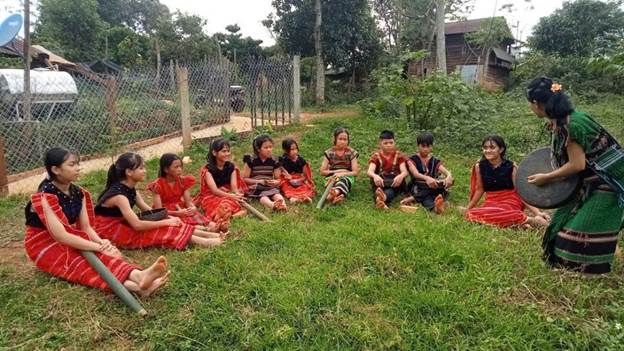
More than just a musical instrument, Gong Prăk is a spiritual symbol, a source of pride, and a precious heirloom passed down through generations of the M’nong – one of the oldest indigenous ethnic groups in Lam Dong. Crafted from a special copper alloy, Gong Prăk differs from ordinary gongs in both sound and craftsmanship. Due to its rarity and sacred value, it is carefully preserved, often kept in a discreet and honored place inside the home.
What makes Gong Prăk truly remarkable is its sound – clear and crystalline like the notes of a lithophone, yet deep and resonant like the voice of the great forest. When its tone echoes across the mountains or reverberates during festivals, it stirs the hearts of all who hear it. Gong Prăk is rarely performed alone; it typically serves as the leading instrument, setting the tone for other gongs and traditional instruments in communal ceremonies.
In the past, Gong Prăk was extraordinarily rare and valuable. The M’nong people often had to trade dozens of buffaloes or cows with traders from Laos or Cambodia to obtain a set. As a result, only wealthy or prestigious families in the village could own one, treasuring it as a sacred family heirloom.
In Duc An Commune, where the M’nong’s traditional culture remains deeply rooted, artisan Thi Mai is among the few who still possess and can perform with this precious Gong Prăk. She shared:
“This gong has been passed down through many generations in my family. When I was young, my father taught me to play it. Now, I am teaching my children and grandchildren so they will never forget the sound of our ancestors.”
A highlight of M’nong gong culture is the ceremony to honor the Gong Spirit before playing Gong Prăk. A jar of ruou can (fermented rice wine) and a rooster are offered before the gong to show reverence. Once the ritual is complete, the gong is suspended midair. The performer steadies it with one hand and strikes the boss with a wooden mallet, producing rhythmic vibrations that spread throughout the space.
Gong Prăk is never played casually. Its sacred sound is reserved for important occasions such as harvest festivals, le nhap bon (new village ceremony), community reunions, and other solemn rites. Each performance carries a distinct message—reflecting the harmony between humanity, nature, and the divine.
Today, only a handful of Gong Prăk sets remain in Lam Dong, and most skilled performers are elderly. This is why the M’nong community is making dedicated efforts to pass on the art to younger generations, preserving it as a vital part of their cultural identity and spiritual heritage.
For travelers who cherish authentic indigenous culture, a visit to a M’nong village in Lam Dong offers an unforgettable experience. Witnessing the Gong Prăk firsthand, listening to its sacred resonance, and even taking part in a gong worship ceremony allow visitors to feel the living heartbeat of the Central Highlands—where the echoes of faith, nature, and humanity still intertwine in every sound.
Tourism Information Technology Center