
(TITC) – The lantern-making craft of the Chinese community in Chợ Lớn (Ho Chi Minh City) has been handed down through generations, becoming part of the collective memory of countless people, closely tied to the brilliant Mid-Autumn Festivals of their childhood. More than a traditional craft, lantern-making has become a cultural symbol, reflecting the vibrant blend and harmony of Chinese and Vietnamese cultural streams.
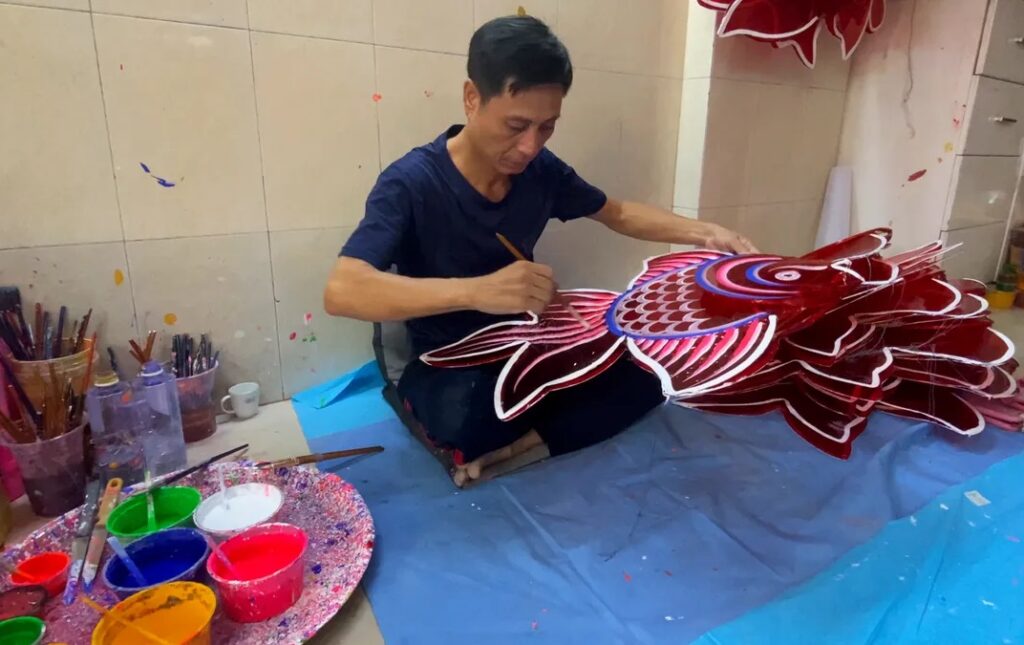
Creating a lantern is a meticulous process involving several steps. First comes the frame, usually made of bamboo, thin wood, or wire, skillfully bent into shapes such as carp fish, jade rabbit, dragon, or phoenix. This requires precision and dexterity, as the frame must be sturdy yet graceful and well-proportioned. Next is covering the frame with layers of paper or coloured cellophane. Each sheet is carefully applied to ensure a smooth surface; when using cellophane, it must be stretched evenly to let the light shine through with a magical glow. After that, artisans paint and decorate the lanterns, adding floral or symbolic motifs. The brushstrokes may be vibrant or delicate, depending on the design. Finally, a candle or small light is placed inside, so that when lit, the lantern glows with a shimmering beauty, showcasing the artistry in every detail. The entire process may take hours or even longer depending on complexity, but each lantern embodies passion, creativity, pride in ancestral heritage, and a wish for happiness and reunion.
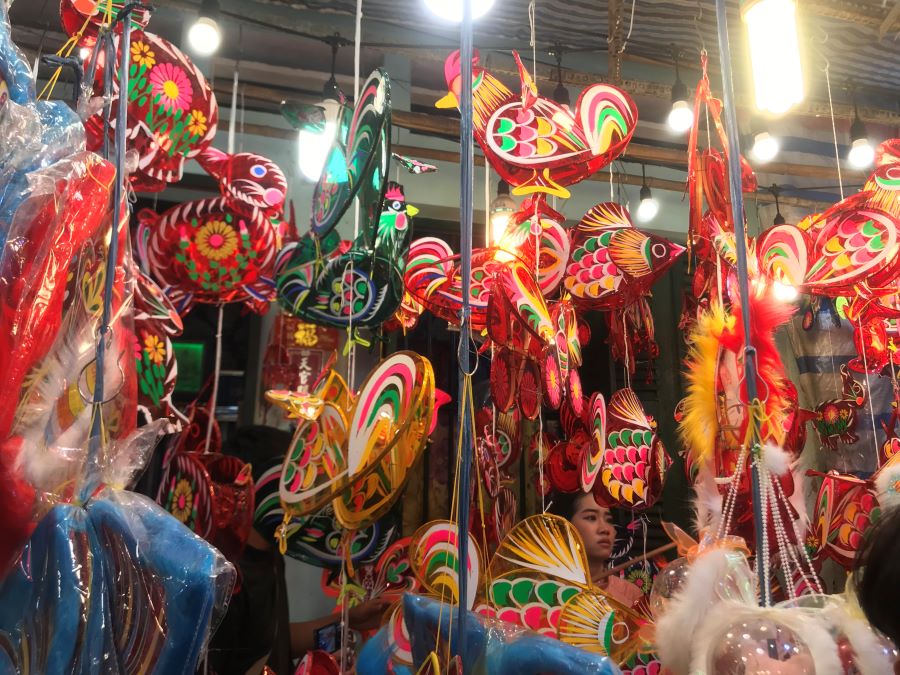
Photo: TITC
Traditionally, Chinese lanterns were known for dragon, phoenix, carp, or mythological motifs from Chinese folklore. Over time, however, artisans in Chợ Lớn have infused Vietnamese cultural elements into their creations. Today, visitors may find lanterns shaped like bronze drums, cranes, lotus flowers, or familiar characters from Vietnamese folktales. This creativity has made the craft unique, no longer confined to the Chinese community but gradually becoming part of the shared heritage of the city. The integration also reflects an open spirit, a willingness to embrace local culture while preserving tradition, creating a colorful cultural flow that remains tightly bound.
In today’s rapidly developing society, traditional lantern-making faces many challenges. The mass production of cheap plastic and electronic lanterns has created tough competition. Yet in this very context, the cultural and artistic value of handmade lanterns in Chợ Lớn becomes even more significant. Every Mid-Autumn season, crowds of visitors, both local and international, flock to Luong Nhu Hoc Street, known as the Lantern Street. They come not only to buy lanterns but to immerse themselves in a vibrant cultural space where thousands of glowing lights illuminate the streets. For them, it is more than shopping, it is a cultural rendezvous, a place to experience the heartbeat of the community and the blending of Chinese and Vietnamese traditions.
One cannot forget the Lantern Festival – the highlight of Chợ Lớn’s lantern-making craft. During the Mid-Autumn Festival, Luong Nhu Hoc Street and neighboring areas transform into a dazzling festival of lights. Hundreds of stalls with thousands of colorful lanterns, the rhythm of lion drums, and the cheerful voices of children and families create a lively cultural tapestry. The Lantern Festival not only preserves the childhood memories of generations but has also grown into a distinctive cultural-tourism event, promoting the image of a dynamic yet culturally rich Saigon.
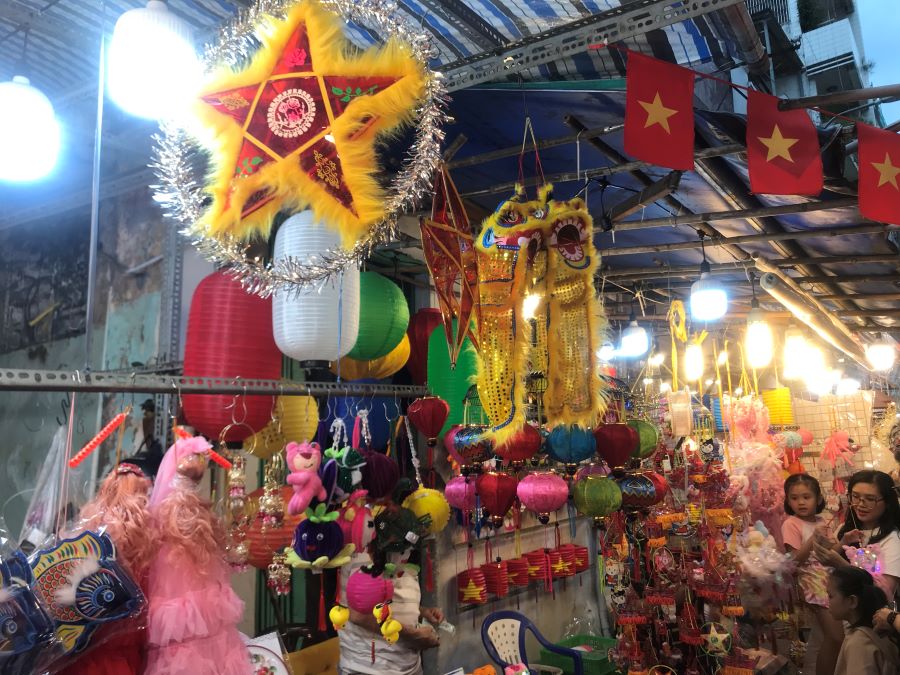
Photo: TITC
To elevate lantern-making into a true cultural-tourism highlight of Ho Chi Minh City, strategic investment and development are needed. Organizing light festivals, lantern-making workshops, and handicraft exhibitions would help visitors better understand the value of the tradition. Encouraging artisans to collaborate with designers and young artists could also generate new lantern models that retain the charm of tradition while incorporating modern touches, appealing to international tastes. Moreover, Lantern Street could be developed as a cultural tourism route, linked with Chợ Lớn’s assembly halls, temples, and other attractions, forming a complete cultural tourism product.
The lantern-making craft of the Chinese in Chợ Lớn stands as a vivid testament to cultural exchange and integration between Chinese and Vietnamese communities in the heart of Saigon-Ho Chi Minh City. Preserving and promoting this tradition is not only the responsibility of the Chinese community but of society as a whole, ensuring that the glowing light of lanterns continues to shine, not fading in the rush of modernity, but enduring as a unique cultural symbol. It is a beacon that attracts visitors and enriches the diverse cultural identity of the city.
Tourism Information Technology Center